mare/
mare/get wet! — Residency of the collective WOOPS
Part of SIT-PLU

“By using banality and proposing something as straightforward as ‘get wet’, we start with a disclaimer we all think we understand its meaning. get wet! will work from the future, creating wet micro-utopias and offering courageous visionary walks into the wet and watery universe.”
WOOPS (Work On Outrageous Public Spaces), Hannes Gröblacher, Lilli Lička, Mira Samonig
get wet! Is the selected project for the first SIT-PLU Residency, starting in January 2026.
Proposed by the art collective WOOPS (Work On Outrageous Public Spaces), Hannes Gröblacher, Lilli Lička and Mira Samonig, the project engages with the riverscapes of Bolzano through the materiality of water and foresees a series of public actions to explore diverse ways of approaching, interpreting and inhabiting the riverscape as a microcosm of the planet.
get wet! will develop up to participatory, collaborative and performative activities in public spaces in Bolzano, each based on the exploration of a specific property of water. Each action is configured by matching an aspect of water with a distinct group and their engagement with it, allowing water to act as a fluid bridge for exchange.
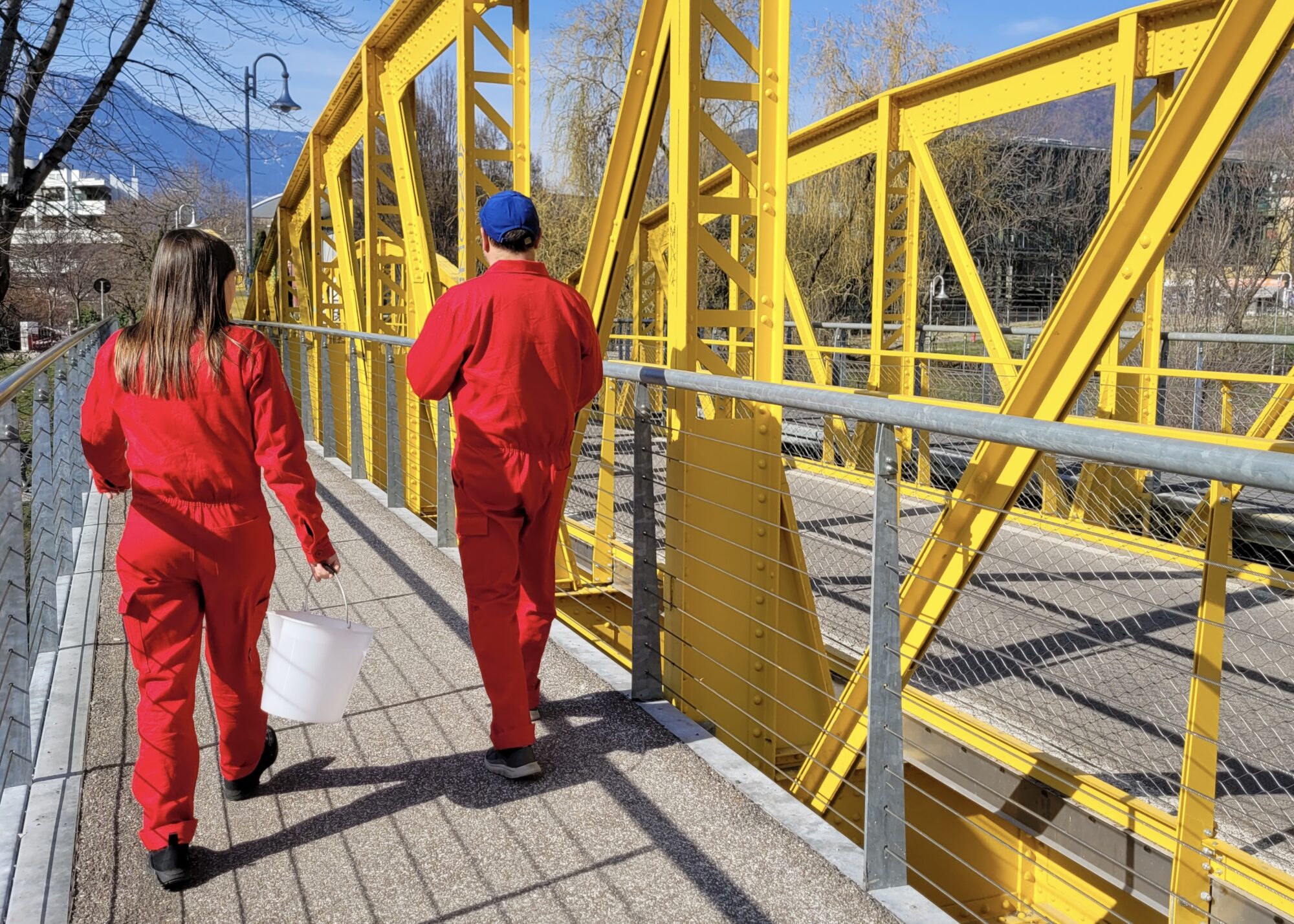
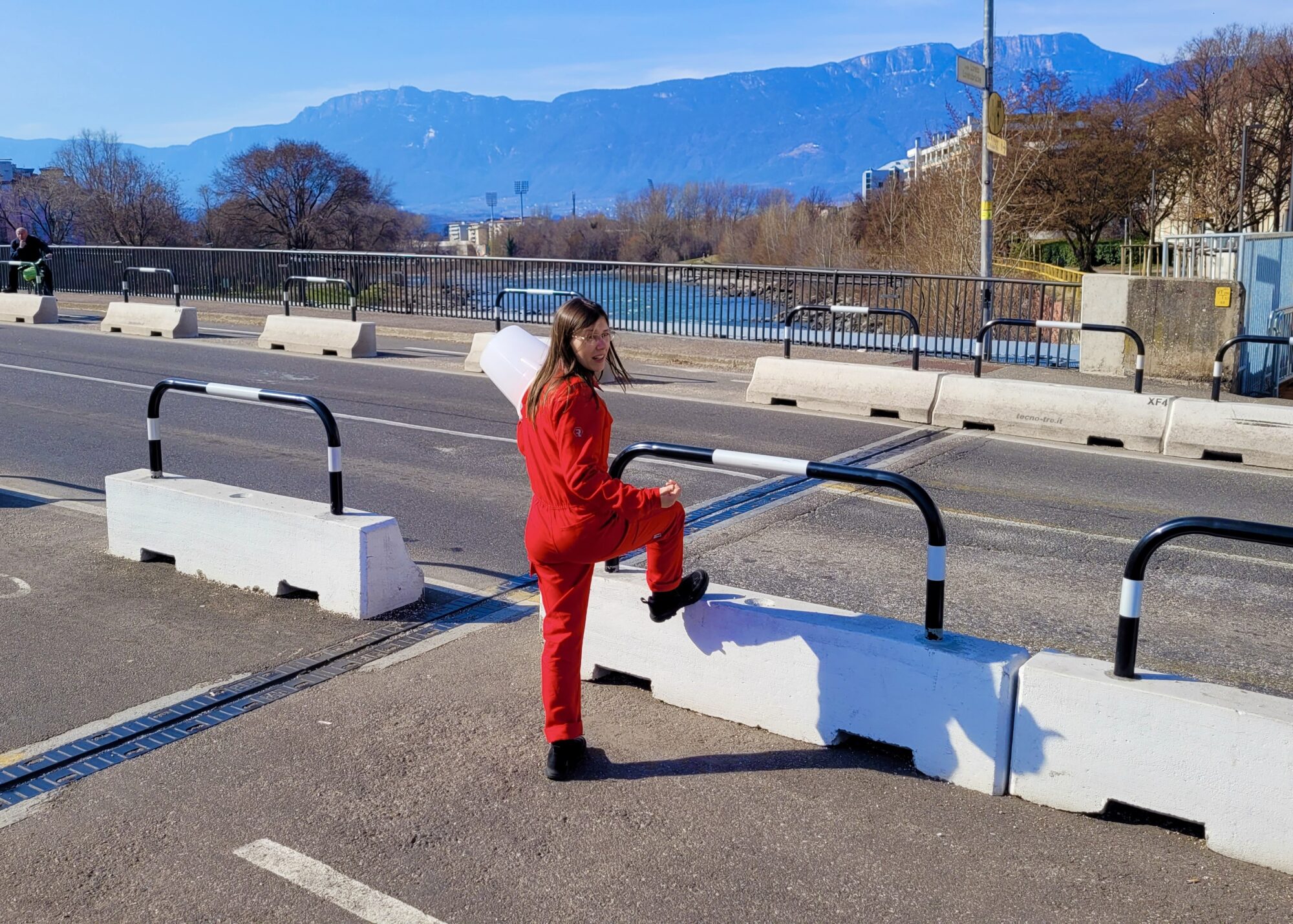

The core material of the river is the water. The quantity, mineral composition, colour, temperature and hydrobiological status and other living and mineral components — from particles to alluvial wood, debris and boulders — shape and constitute the water. While water is often a spectre of the imagination – a reservoir of promises and a container for projections – focusing on its materiality brings other qualities to the fore: physical tangibility, multiformity and fluidity. The physical collective experience is fundamental as a basis upon which discussions are triggered and comparative knowledge is gained.
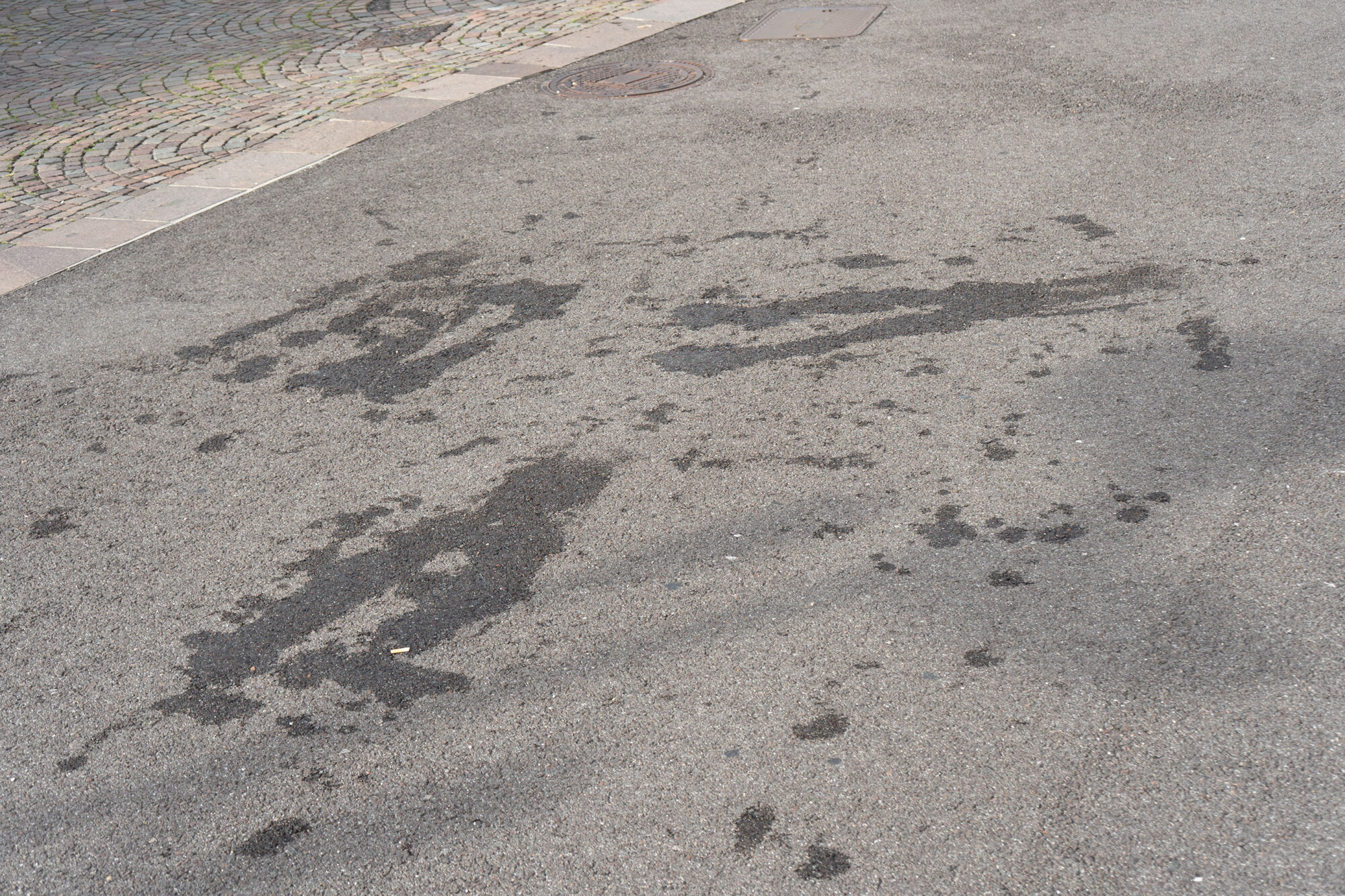
How wet do we get, how wet is wet, what do we get from getting wet? How long do our wet traces of the river last in the town square, how can we create new imaginaries with pouring images?
Based on these initial reflections on the materiality of water, the practitioners in residency begin their exploration aodpting a method characterised by actively employing humour, absurdity and irony as well as banality. These sentiments run through their shared practice and are used to cultivate a low-threshold atmosphere to get people involved, to encourage a climate of surprise as a moment of stepping out of routines and to actively work for instead of against something.
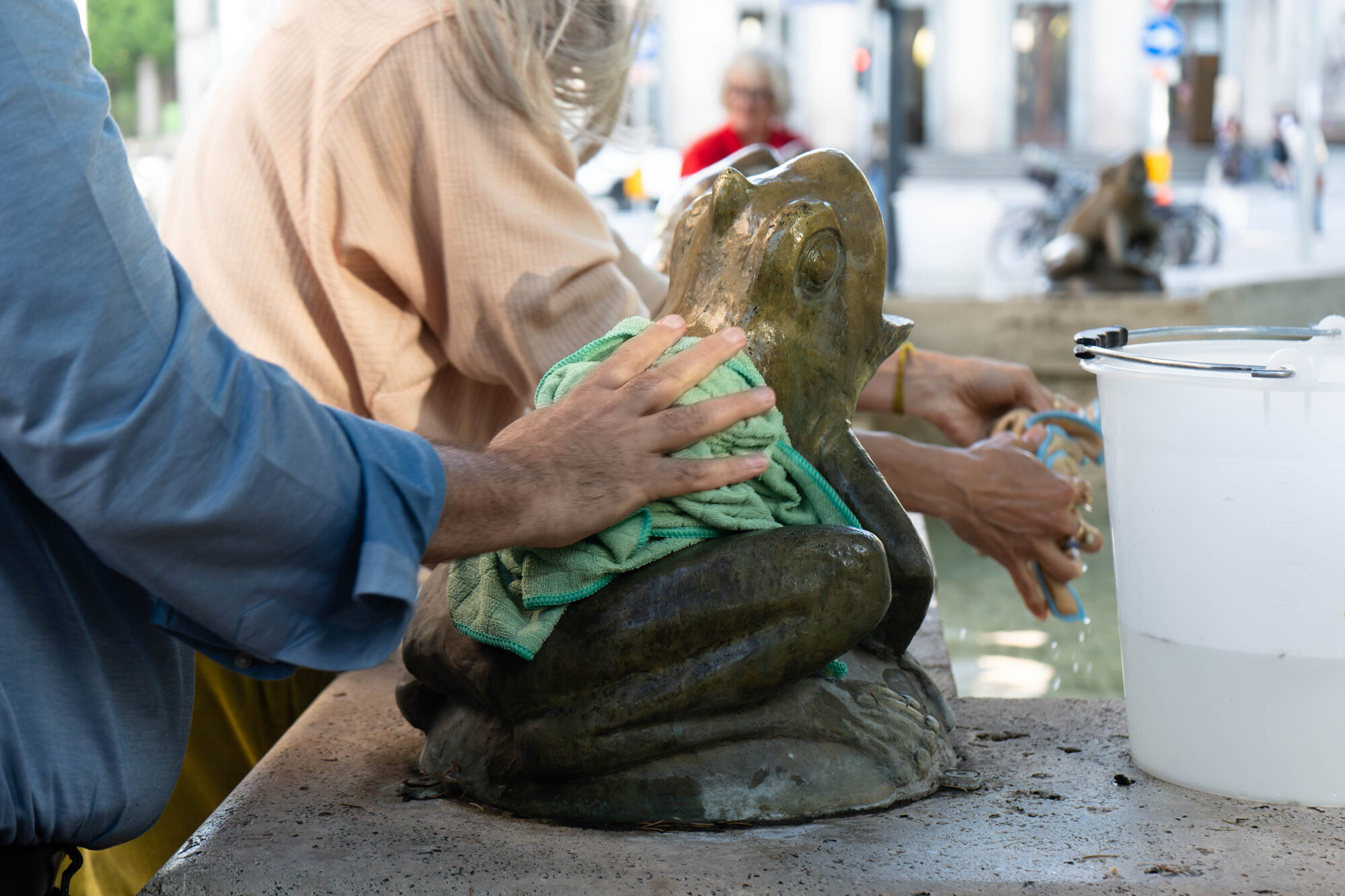
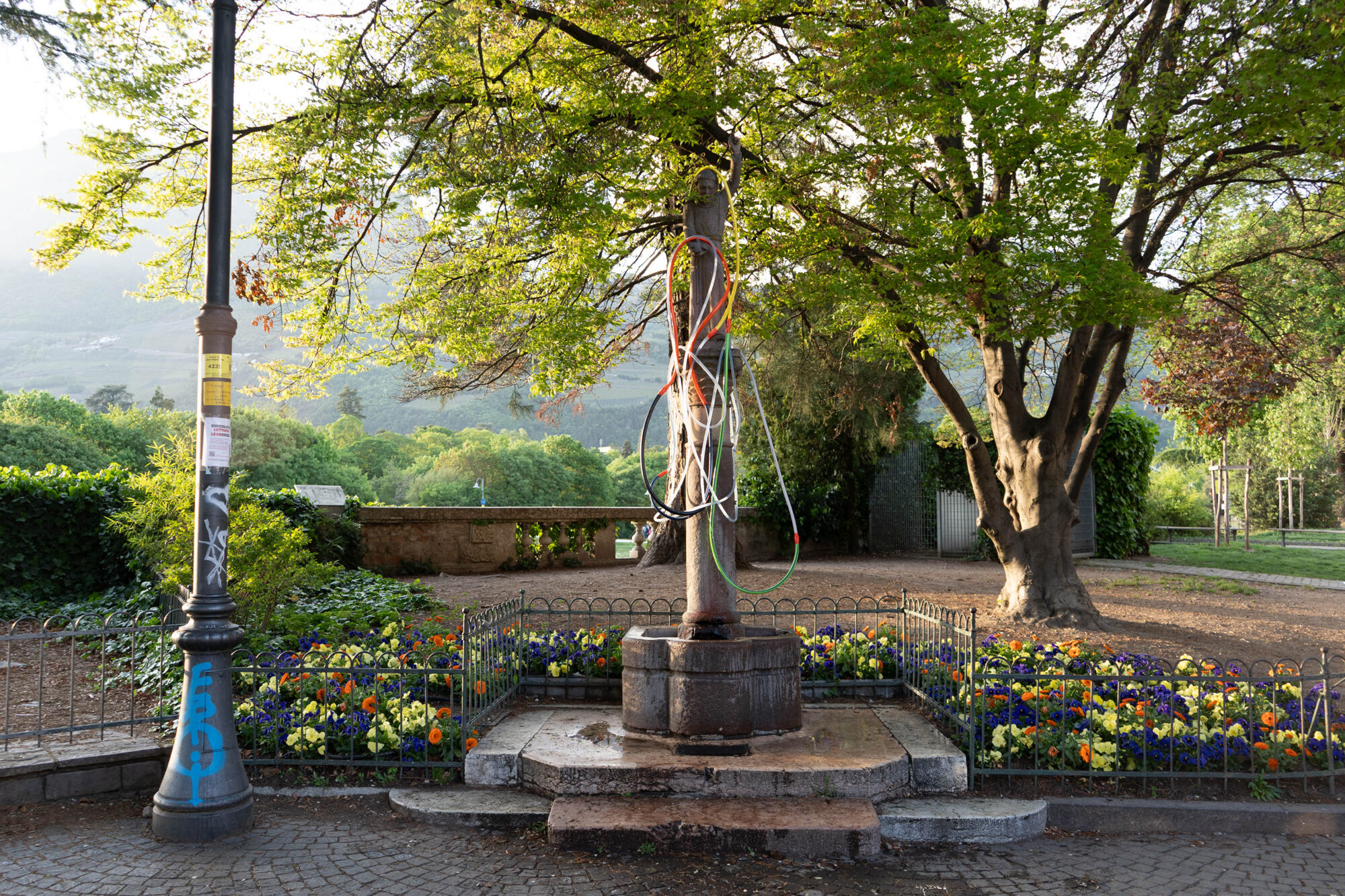
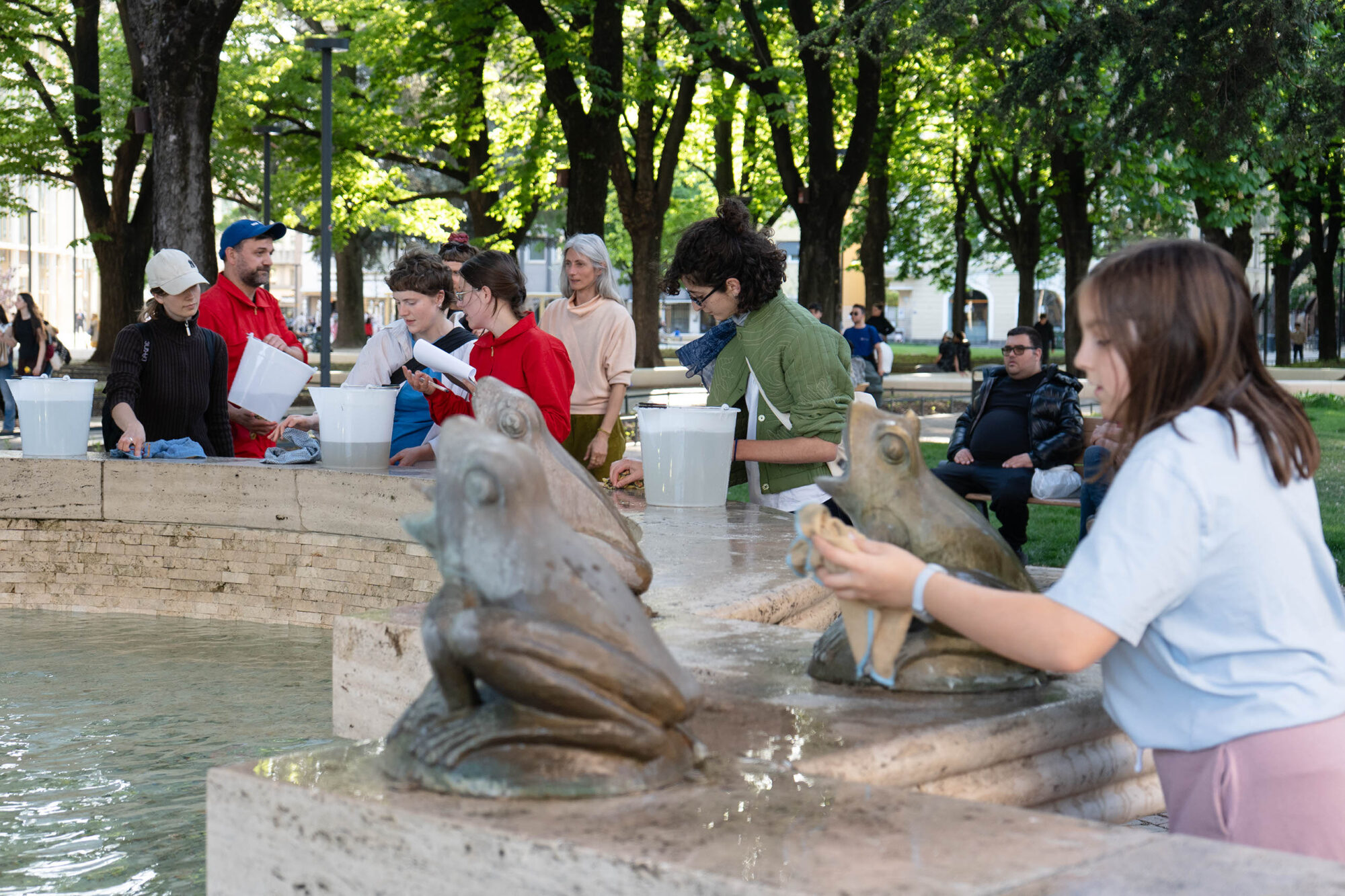
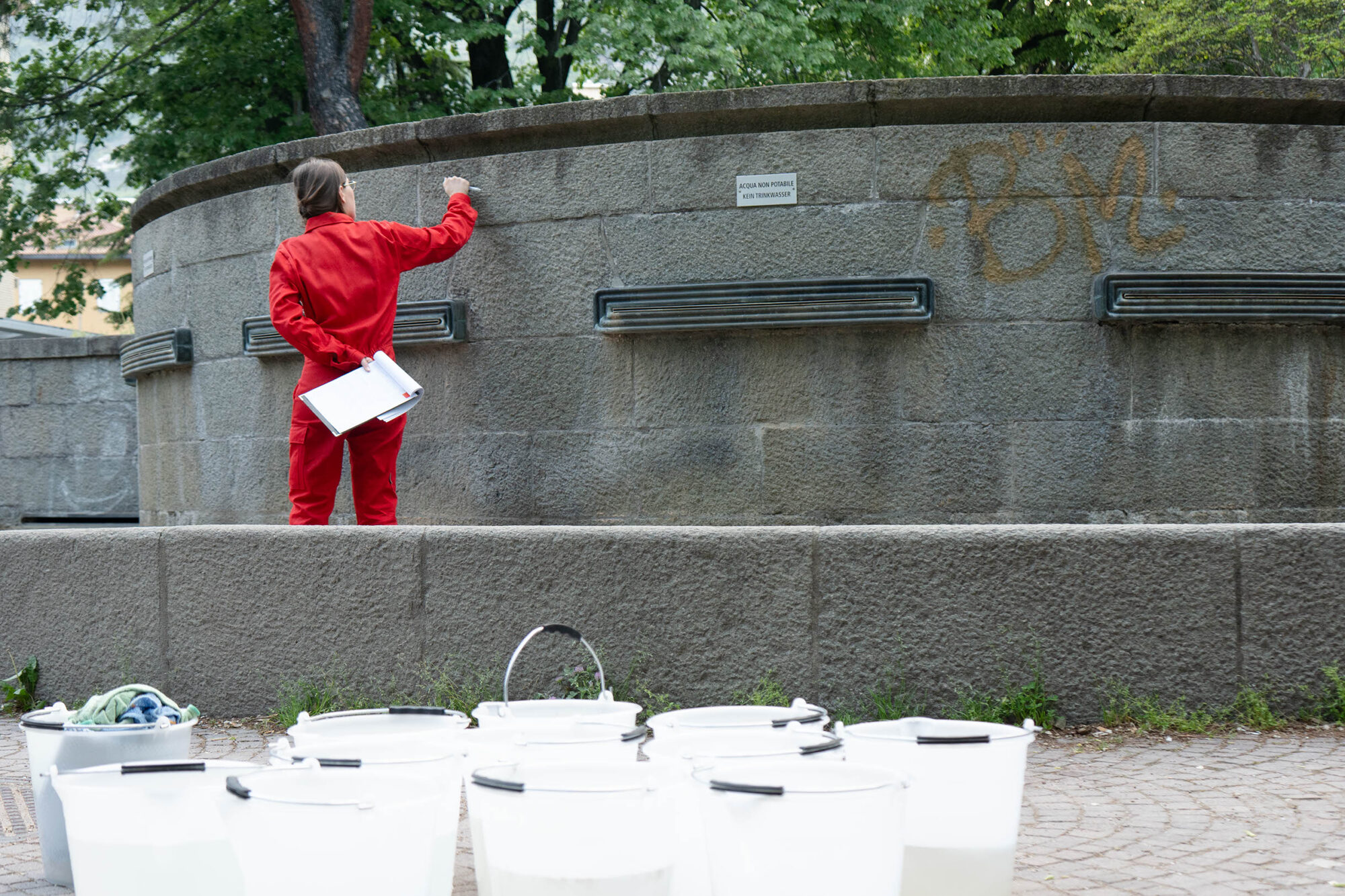
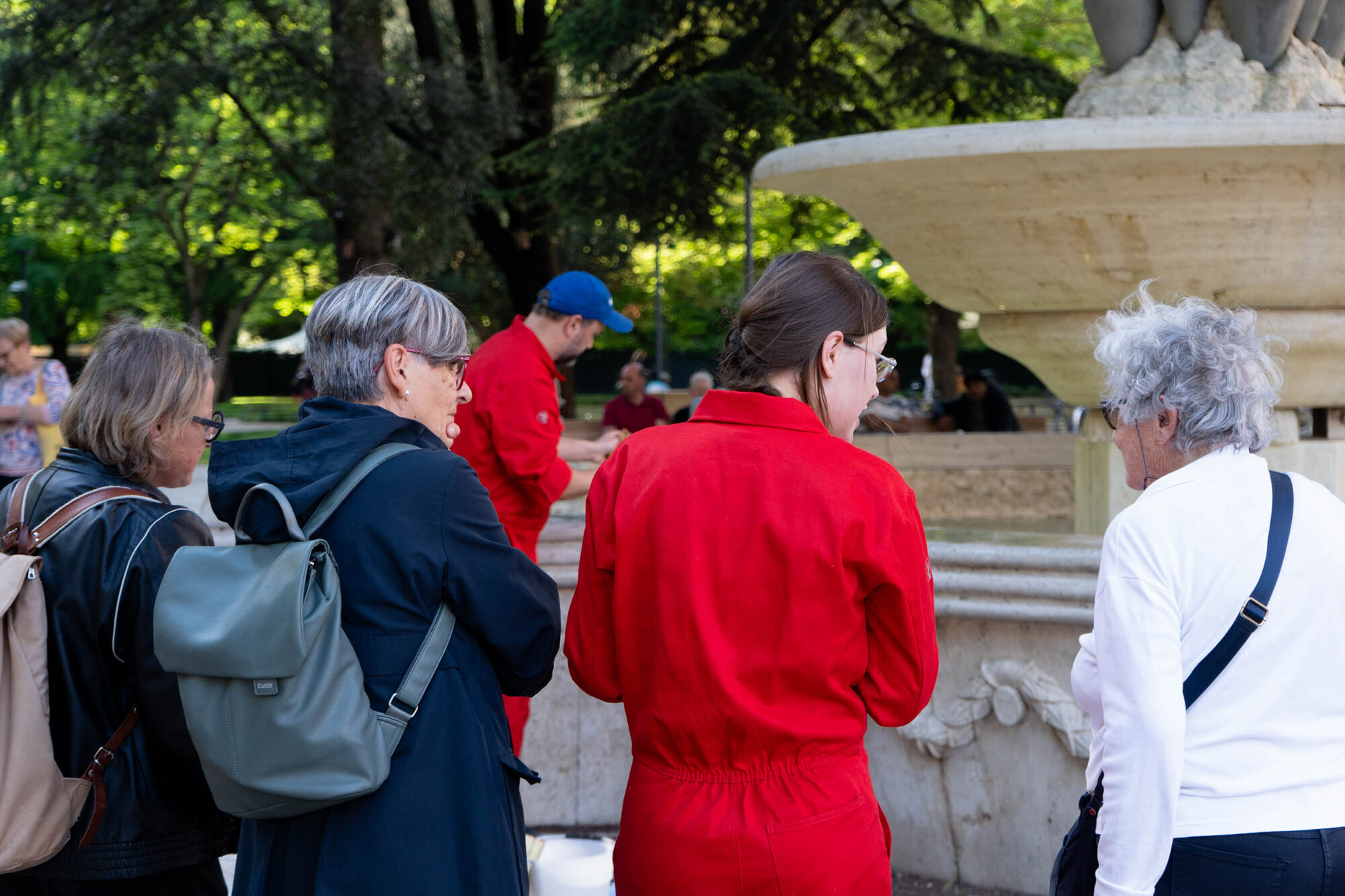
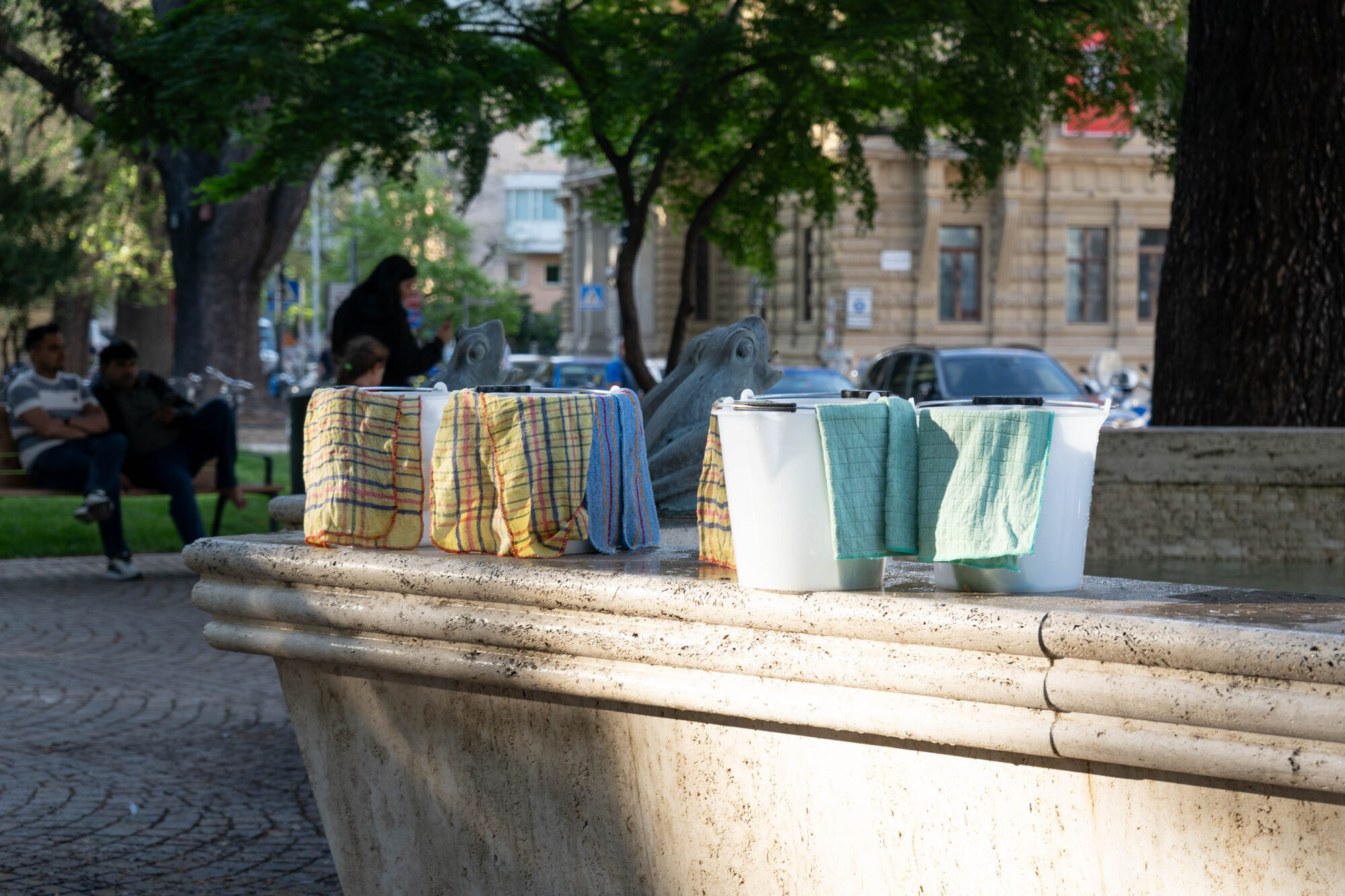
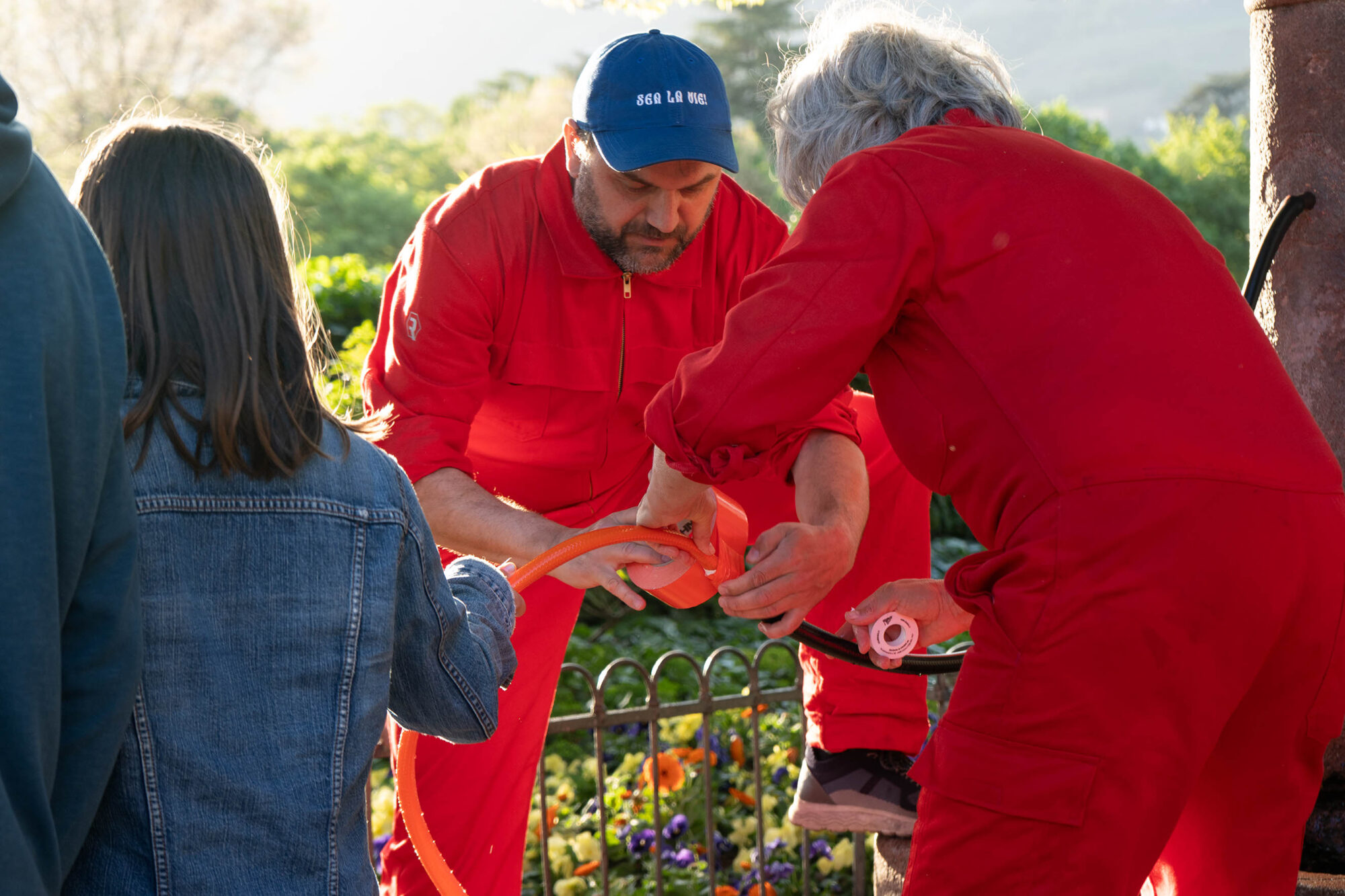
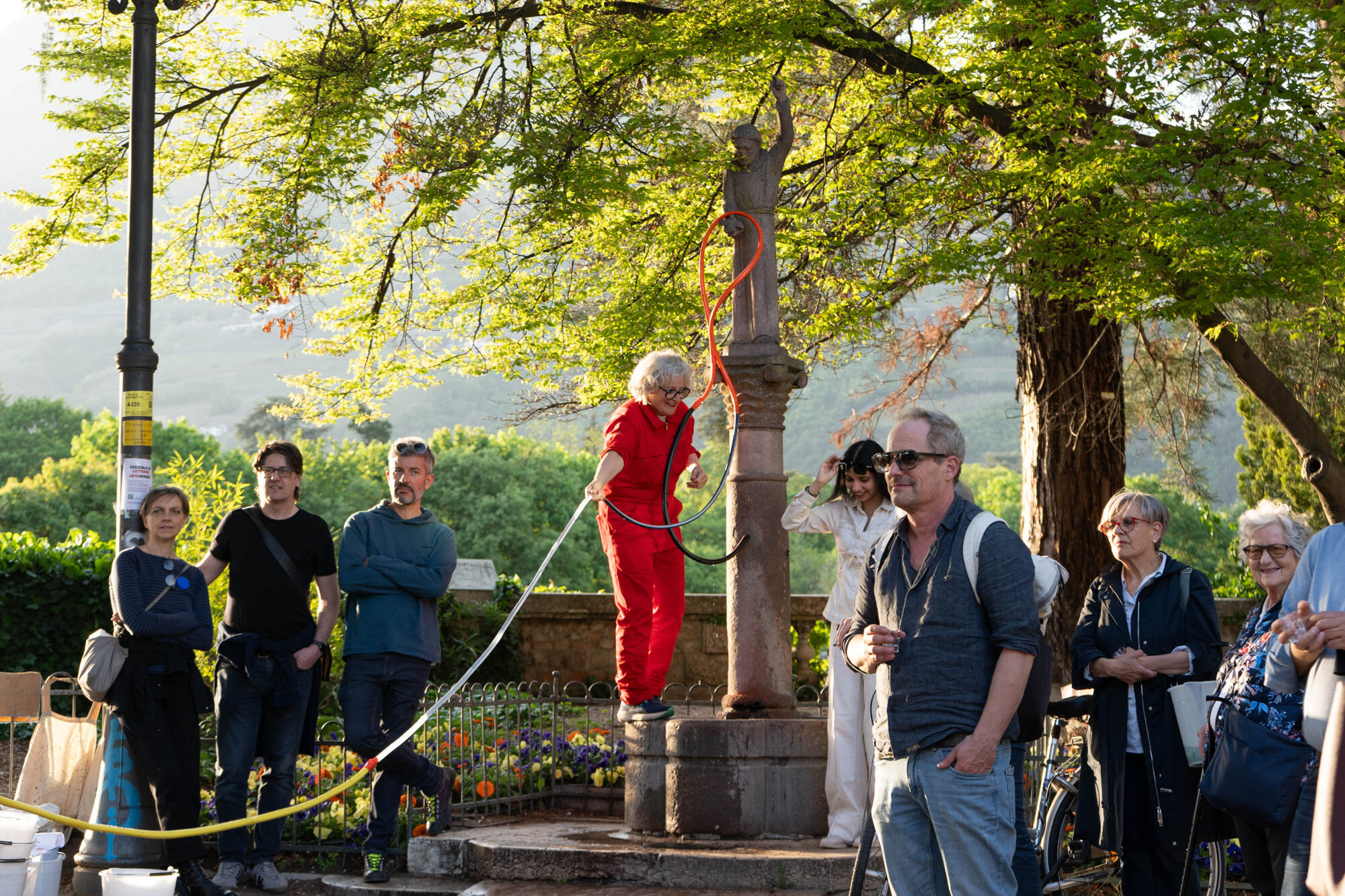
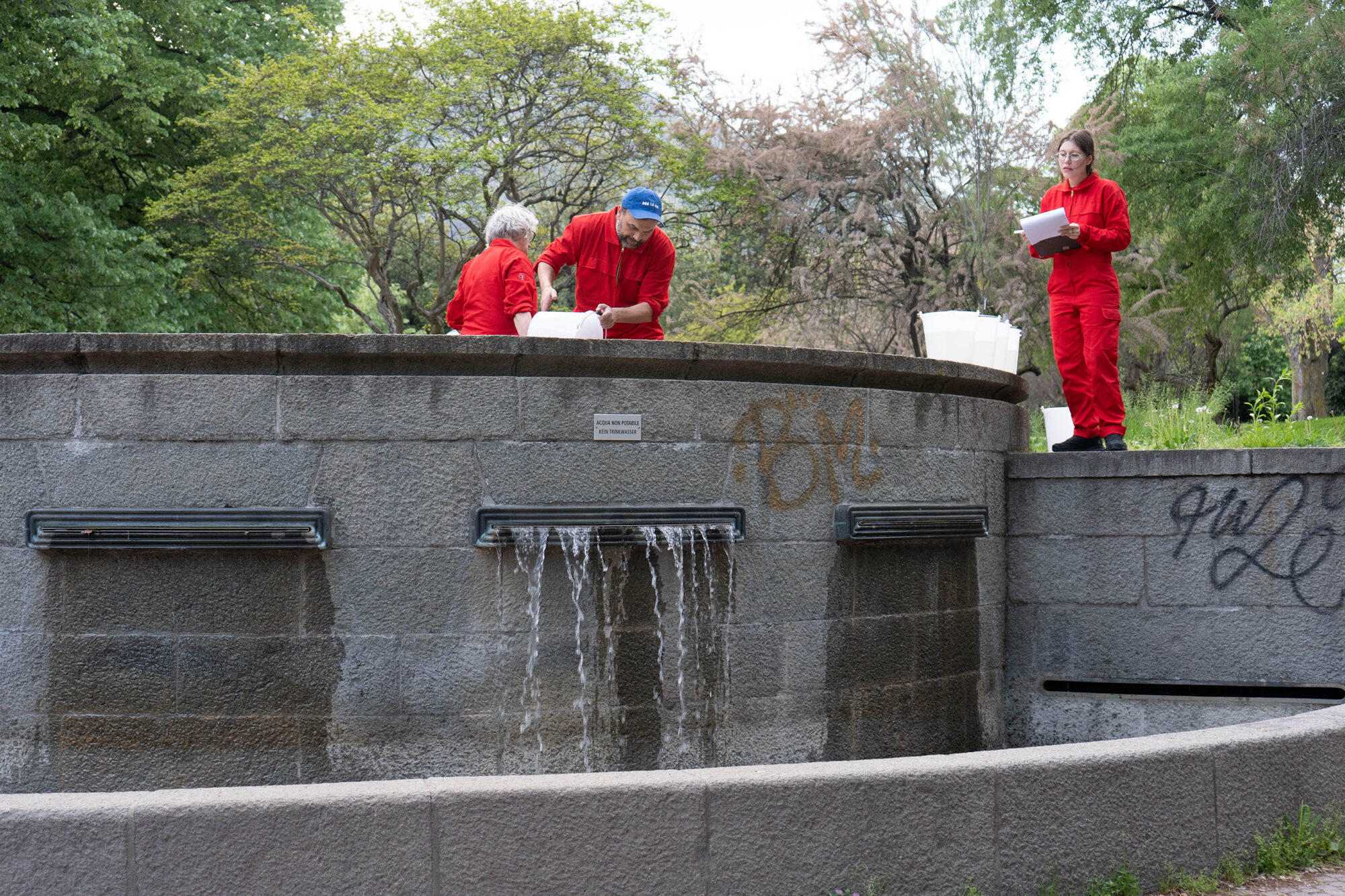
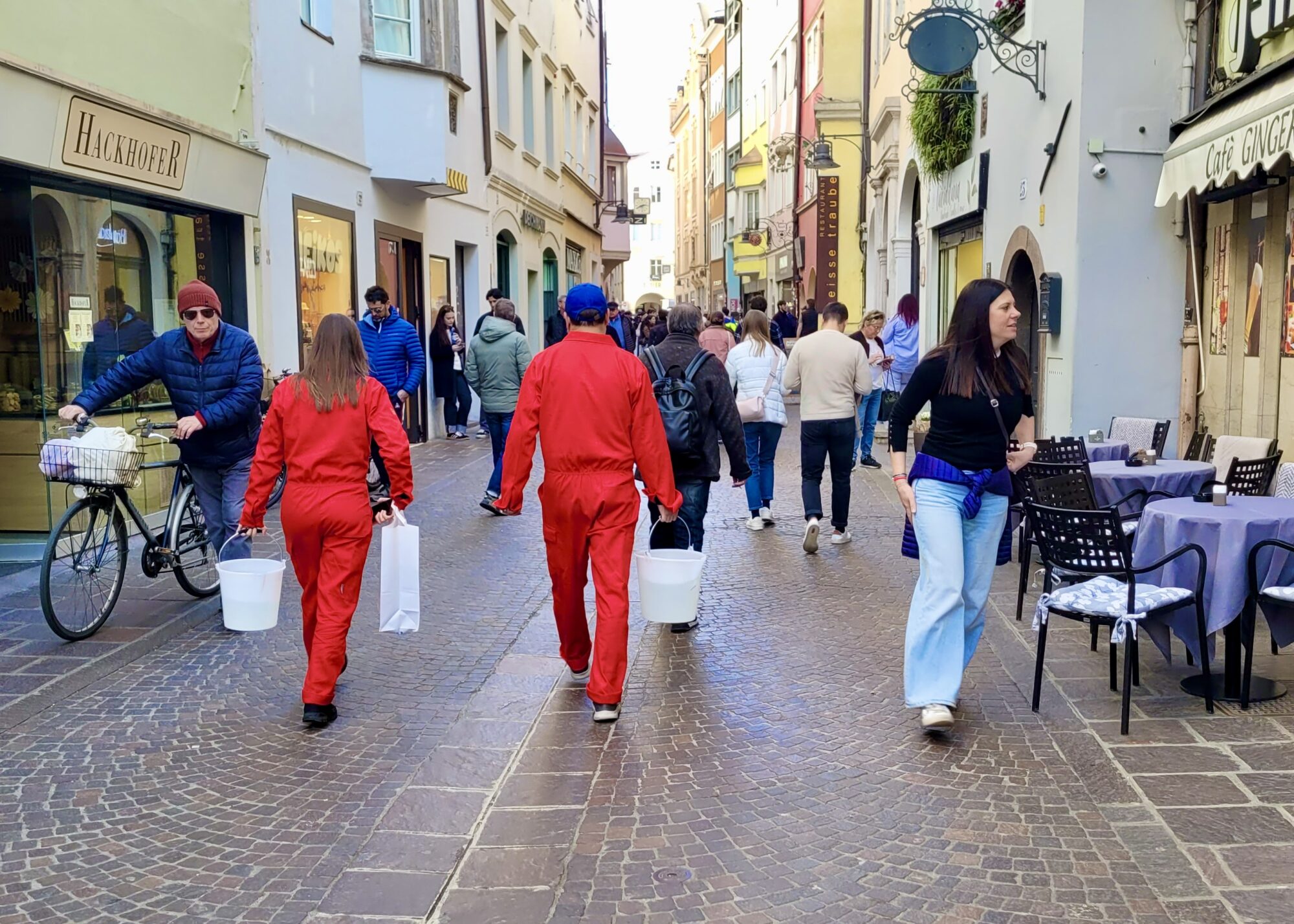
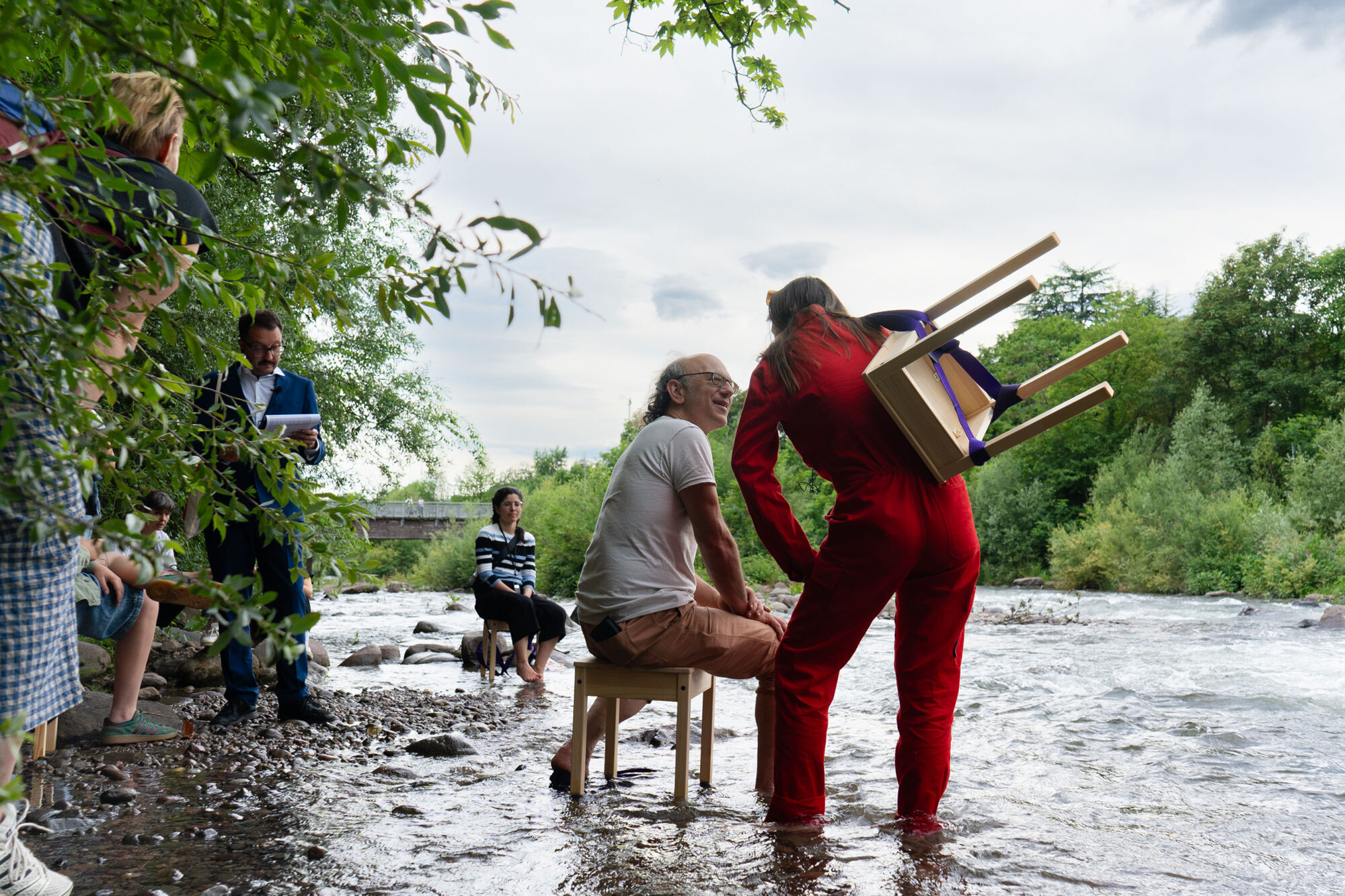
16 April – Water comes!
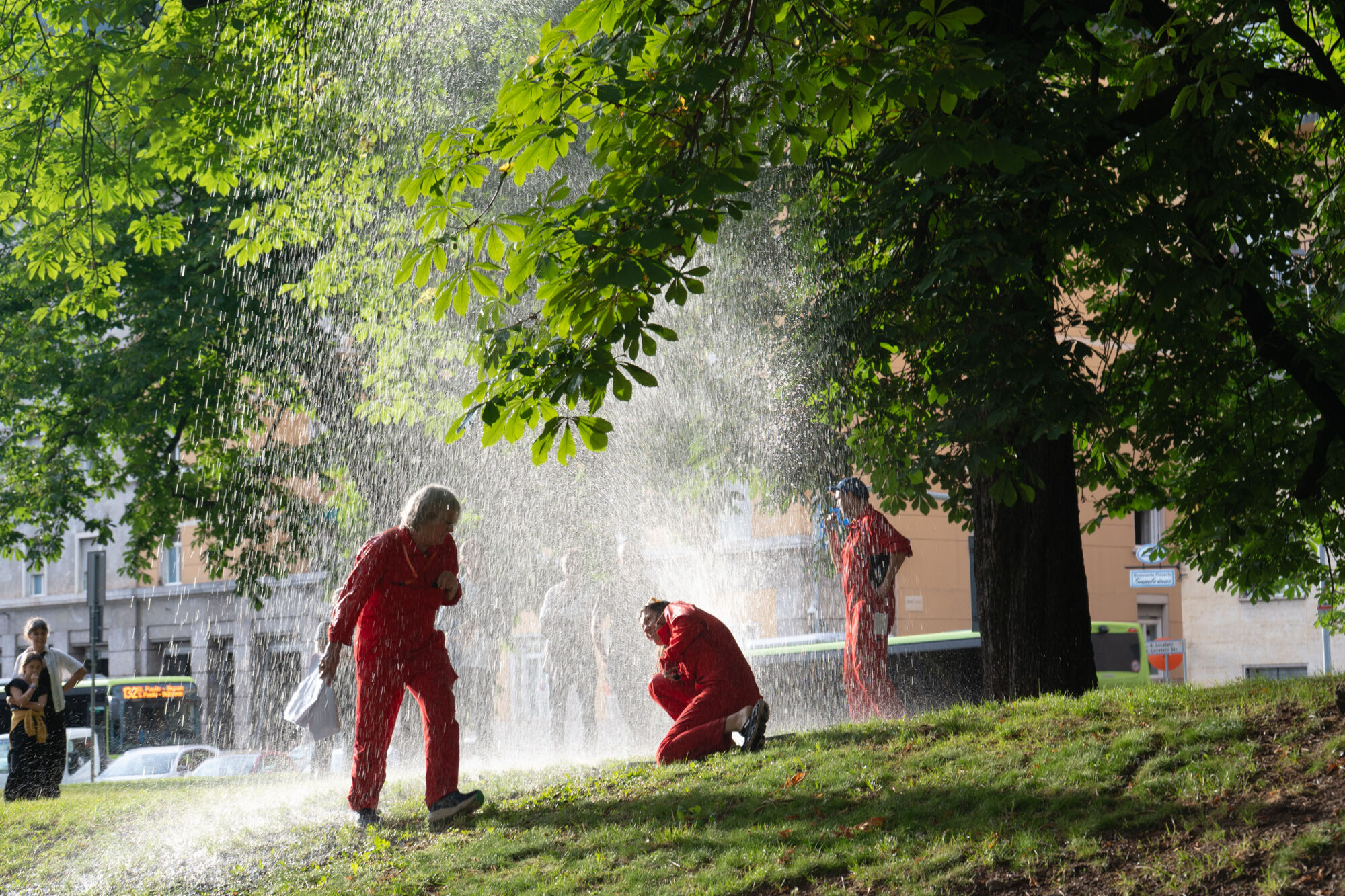
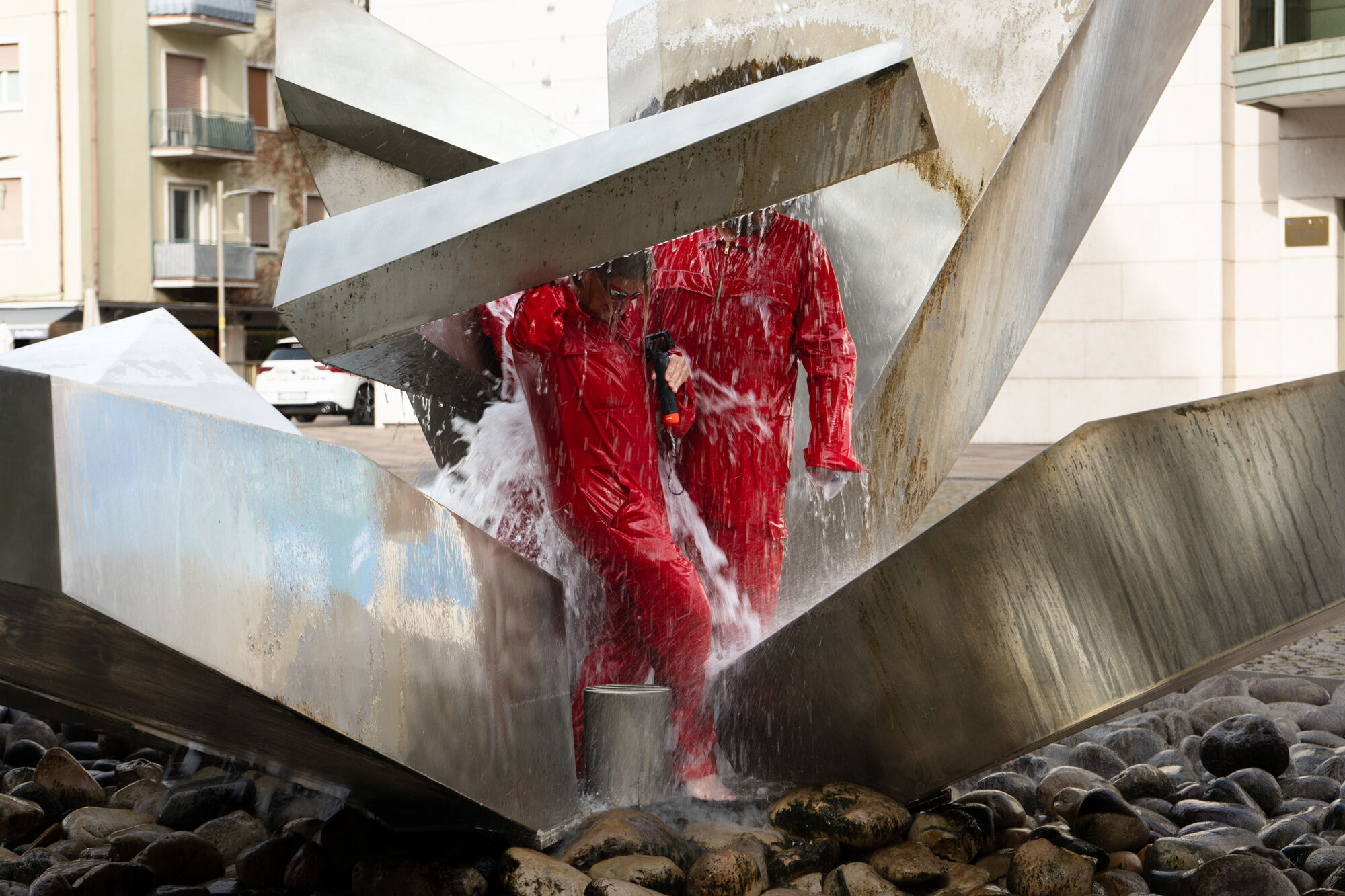
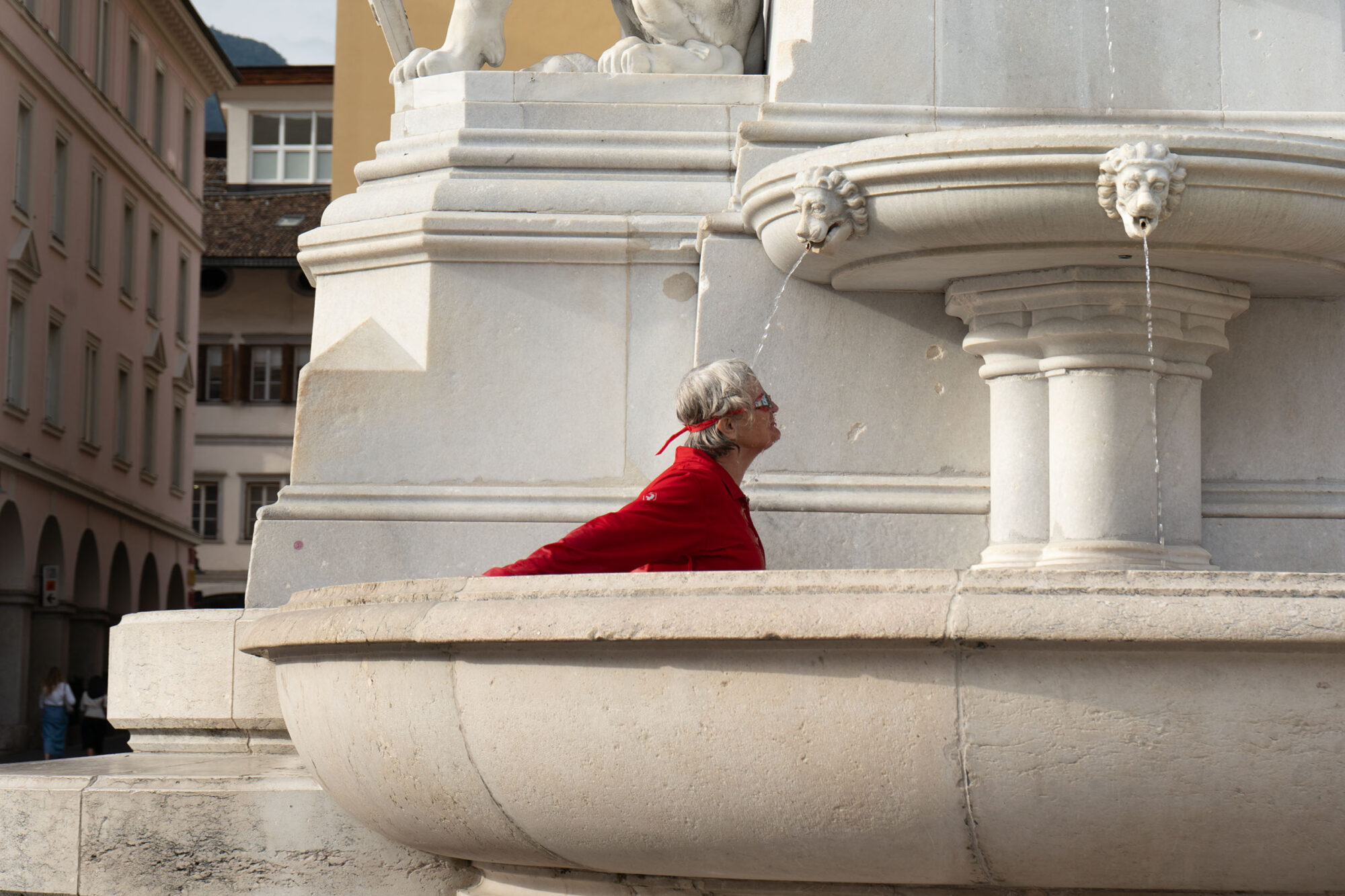
A collaborative maintenance tour along Bolzano’s public fountains with surprising tasks, wicked problem solving and wet interventions.
Often overlooked and taken for granted as elements of urban public space, fountains become devices for deviation and re-reading, bringing us into contact with public water.
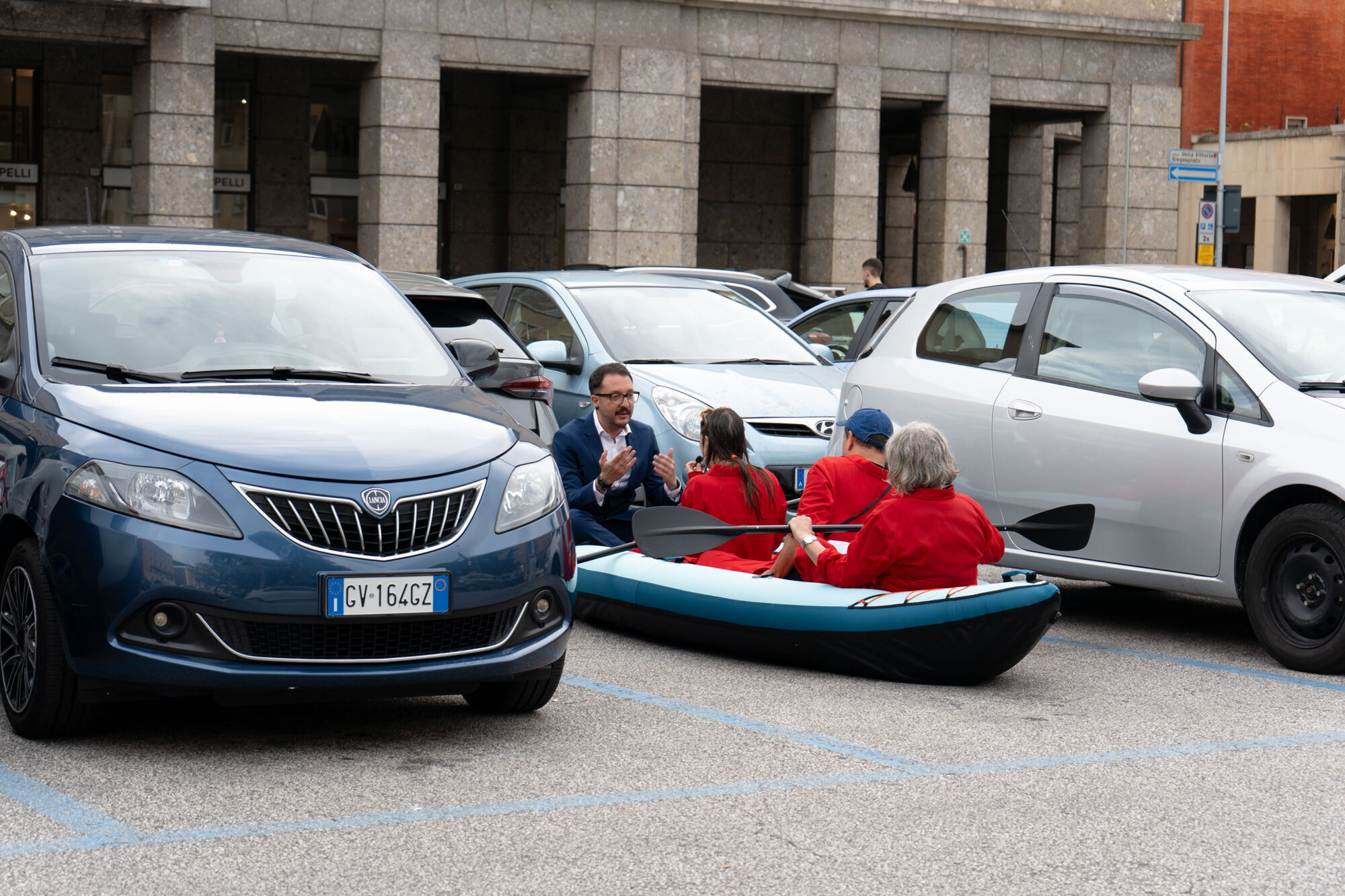
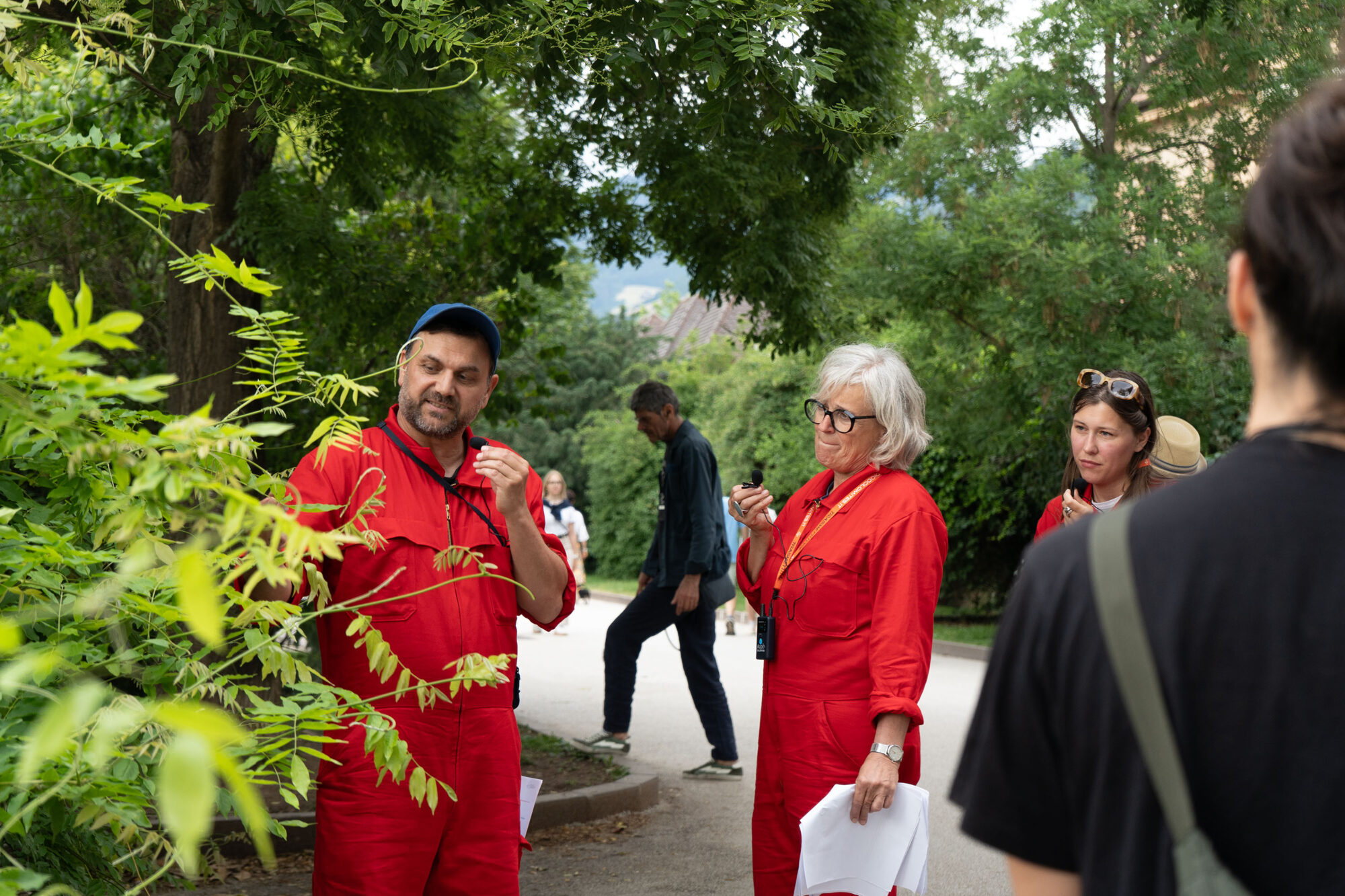
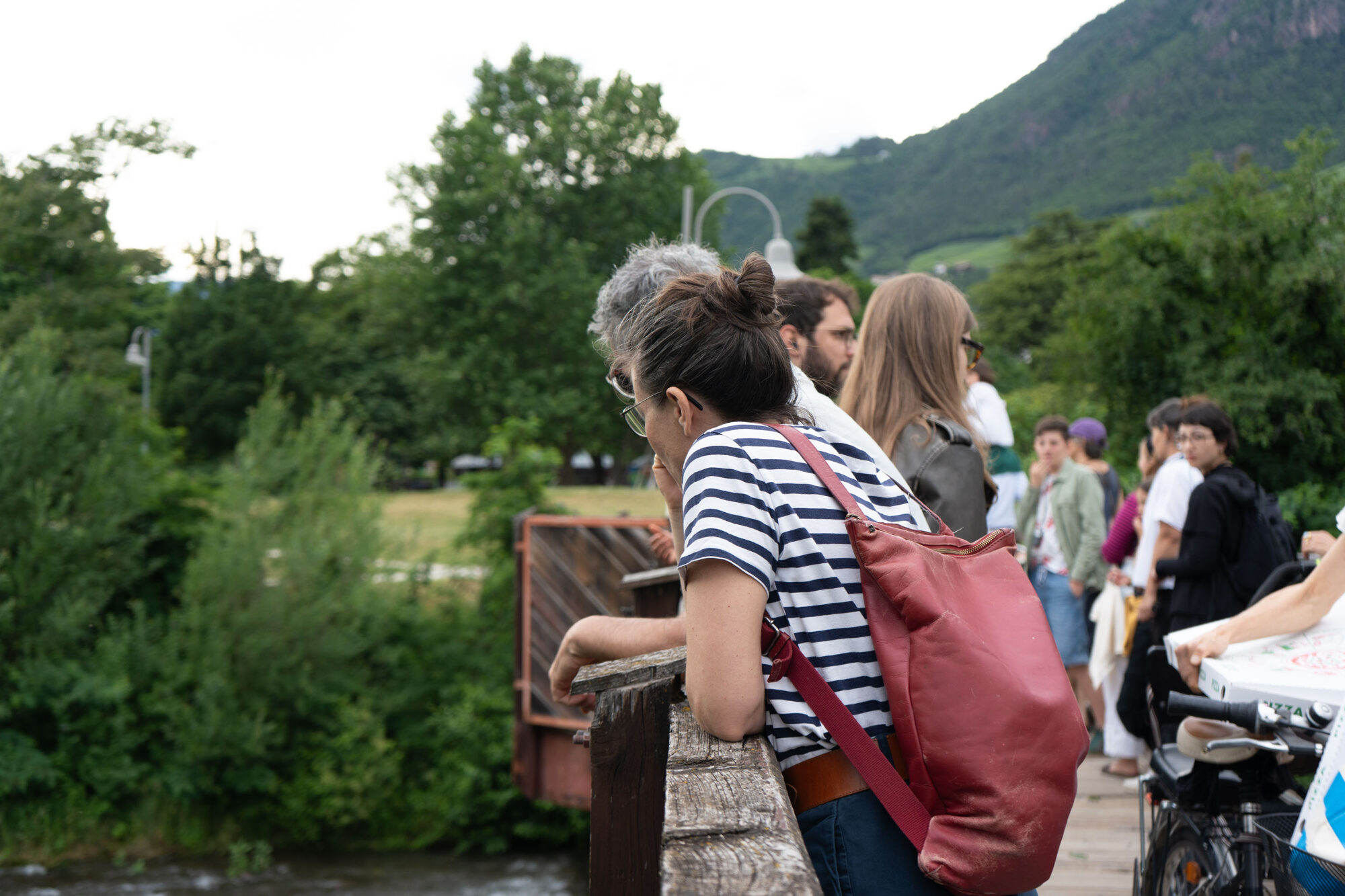
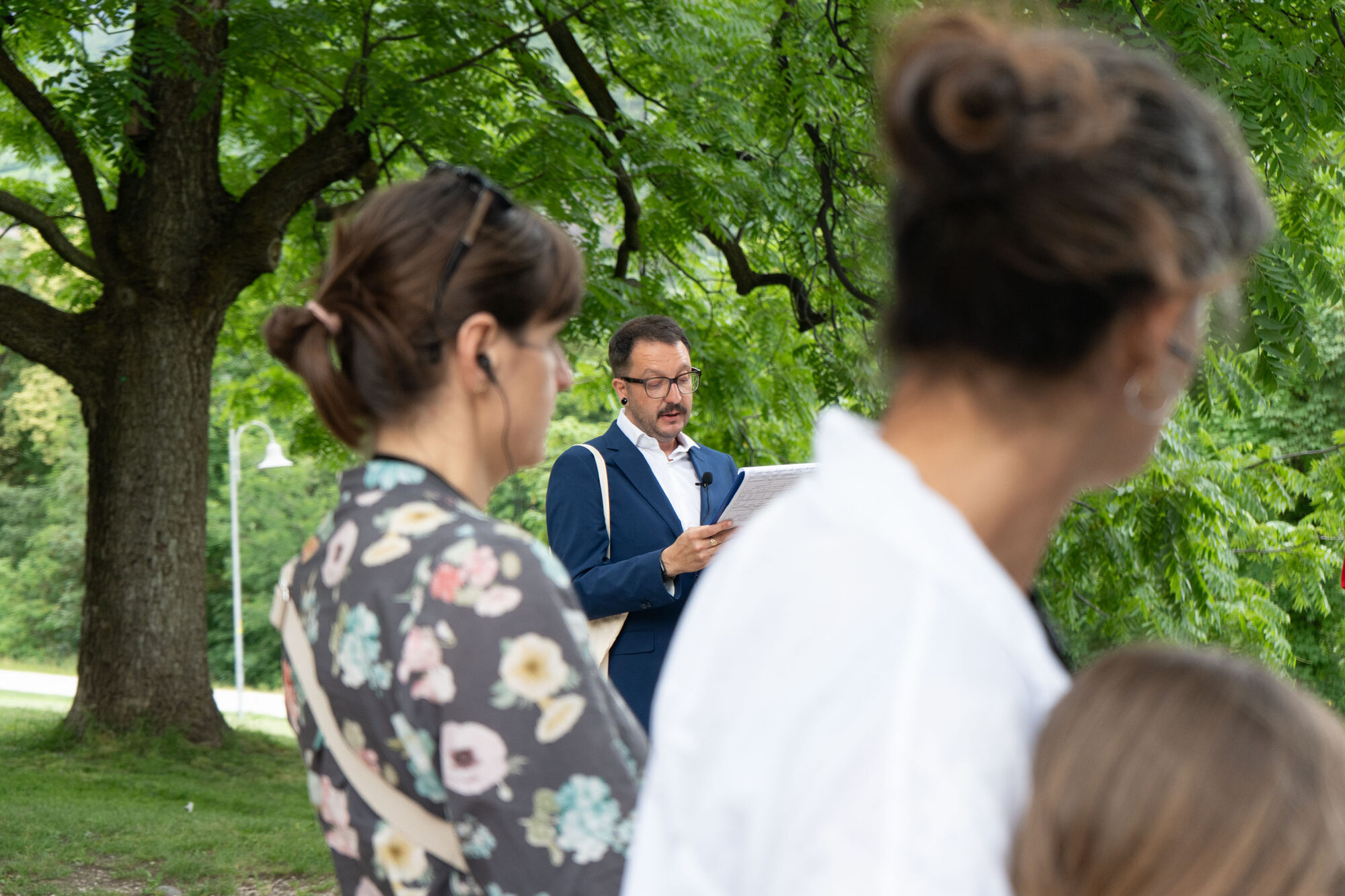
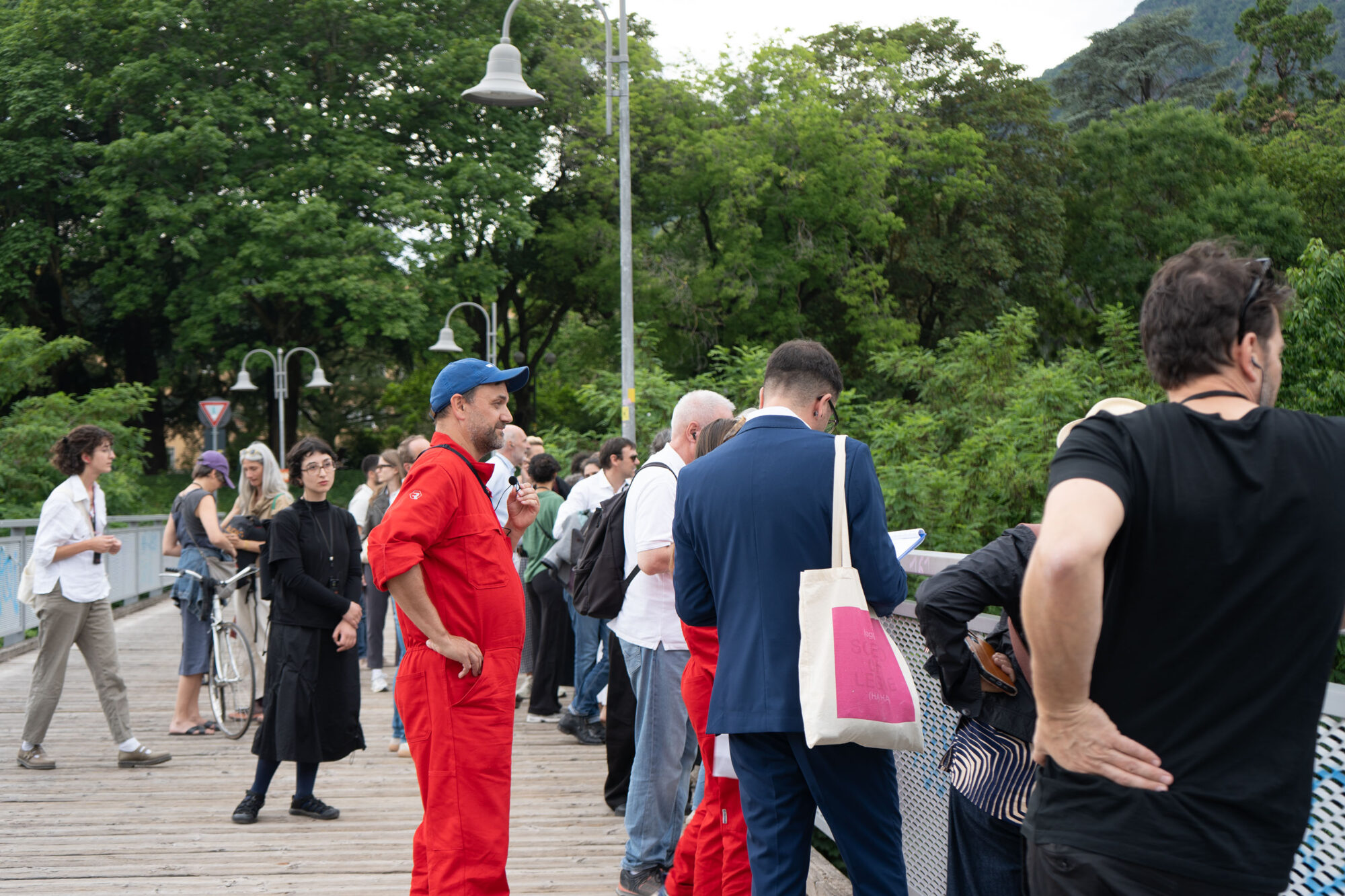
4 June – To the water!
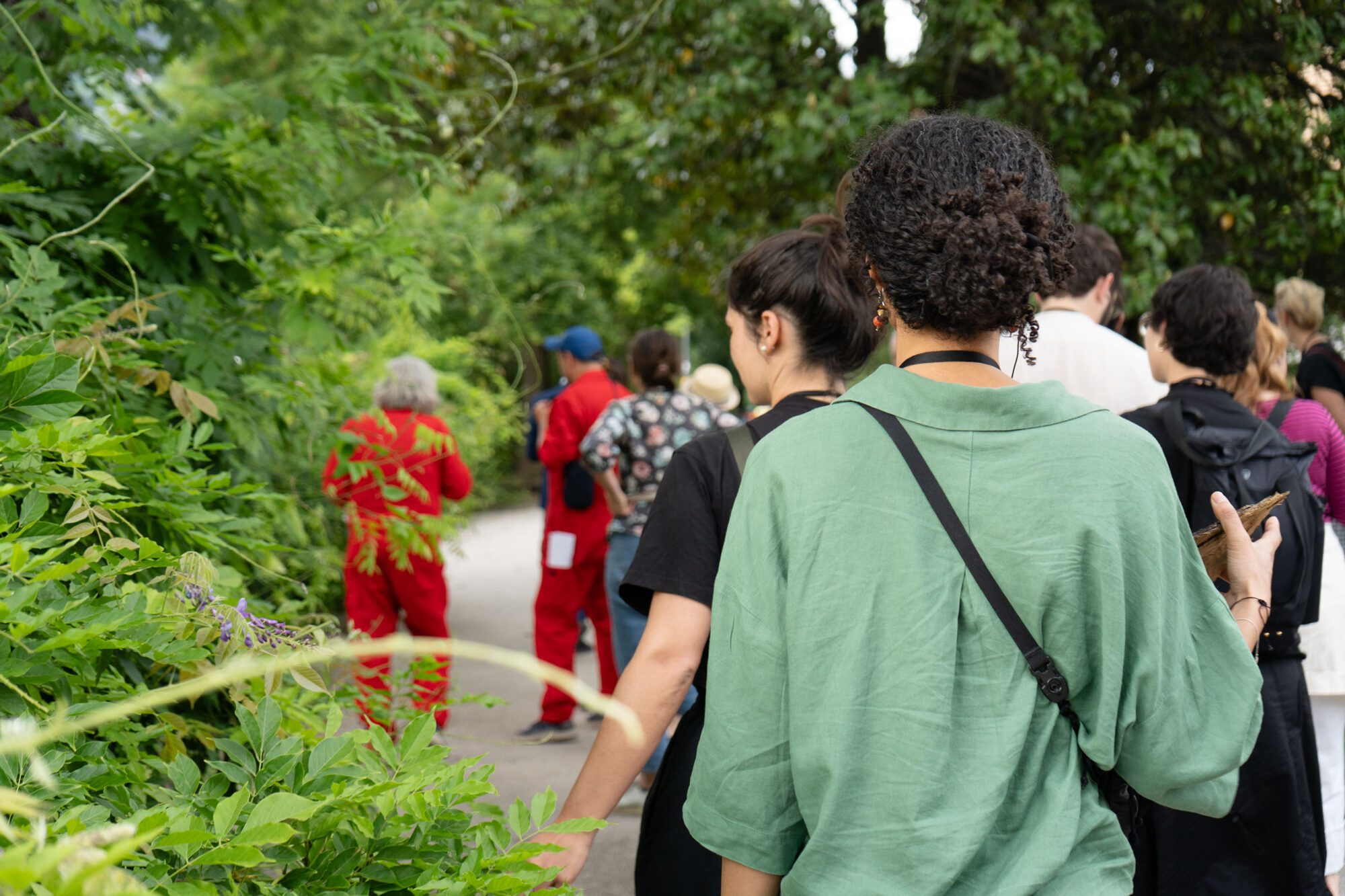
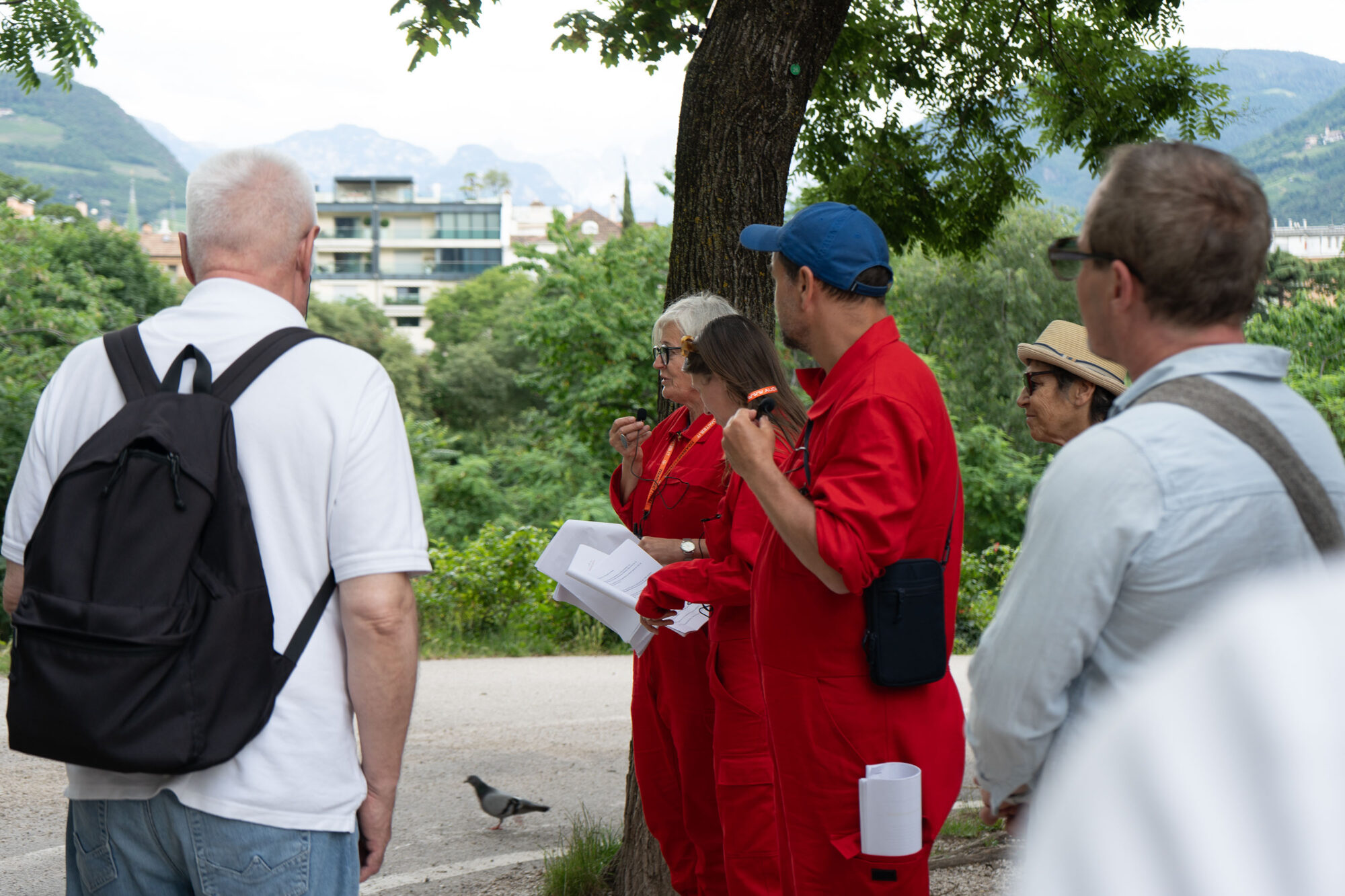
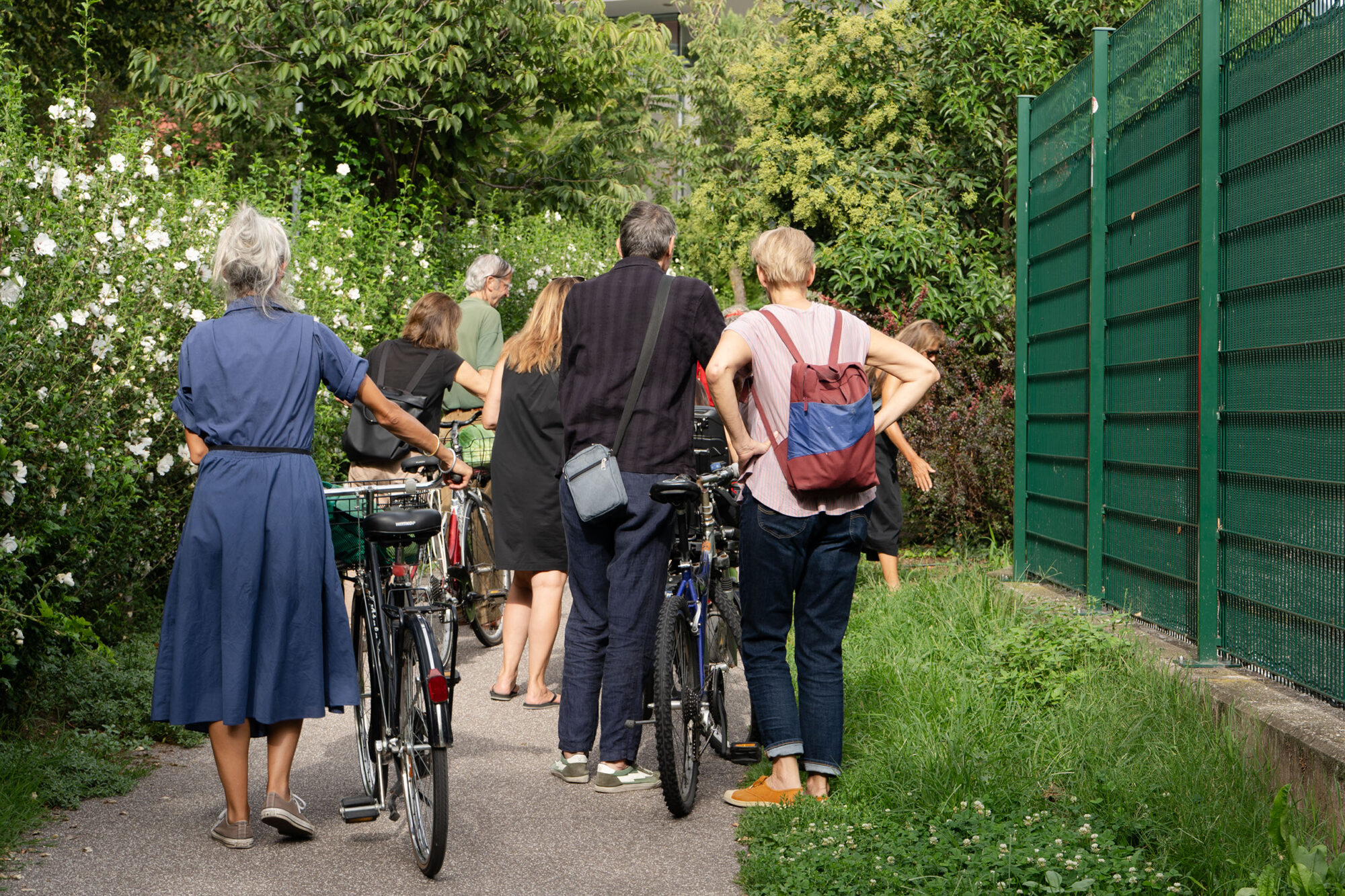
During one 90-minute walk, we move through a speculative, future-oriented Bolzano, listening to stories, visions, and scenarios connected to water. The narratives, accessible through headphones, weave together unexpected imaginaries.
27 August – Into the Water!
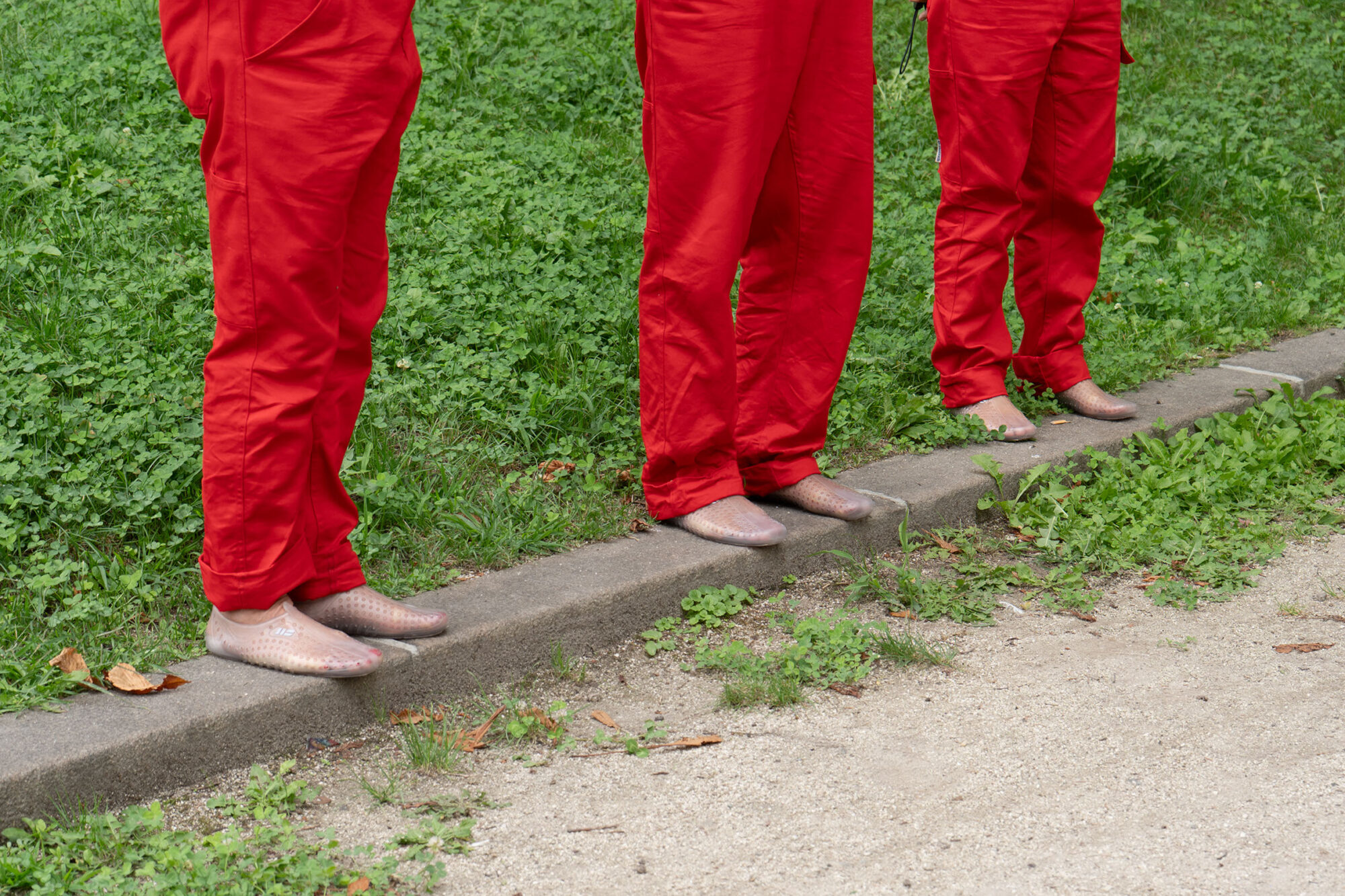
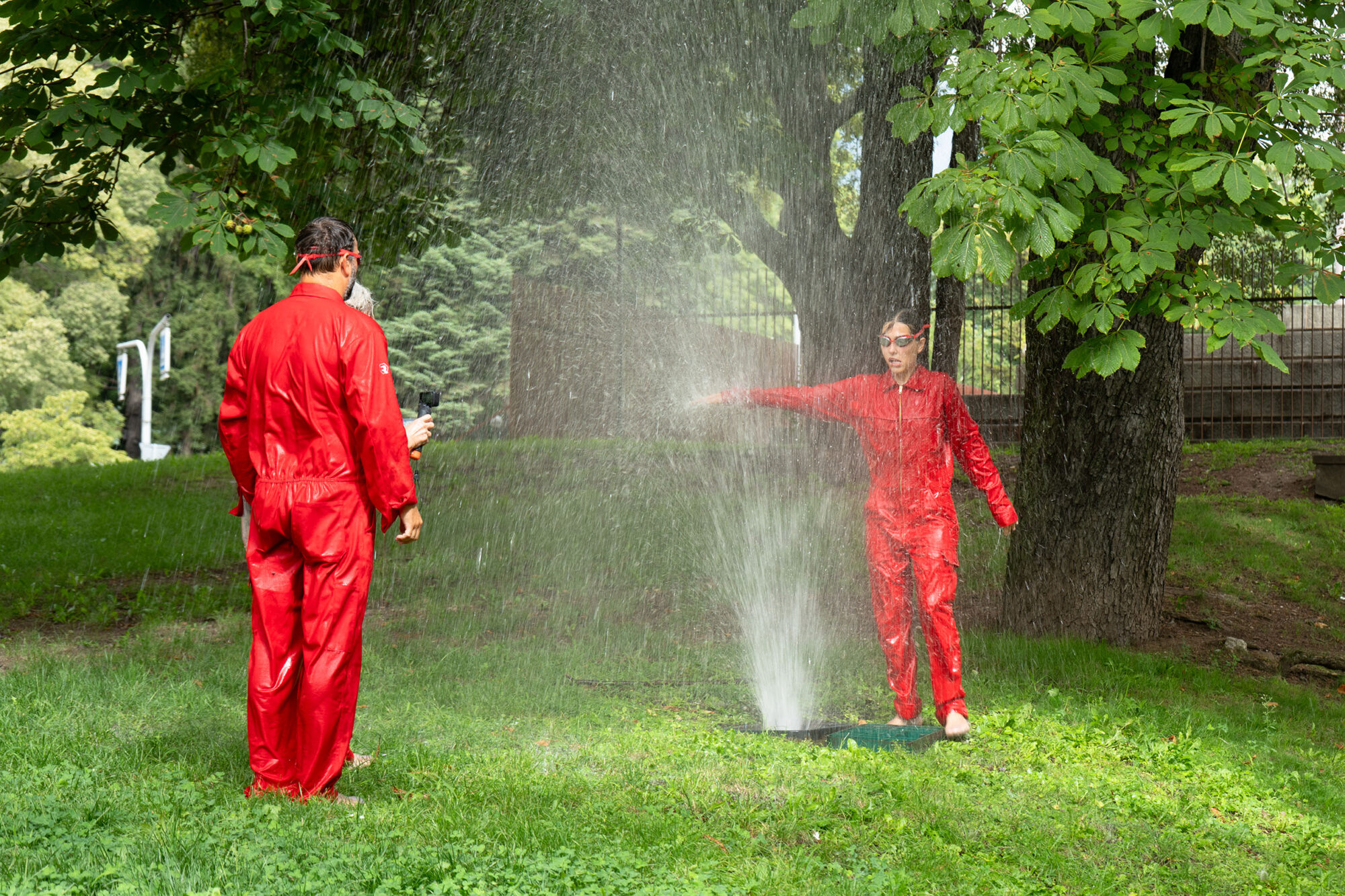
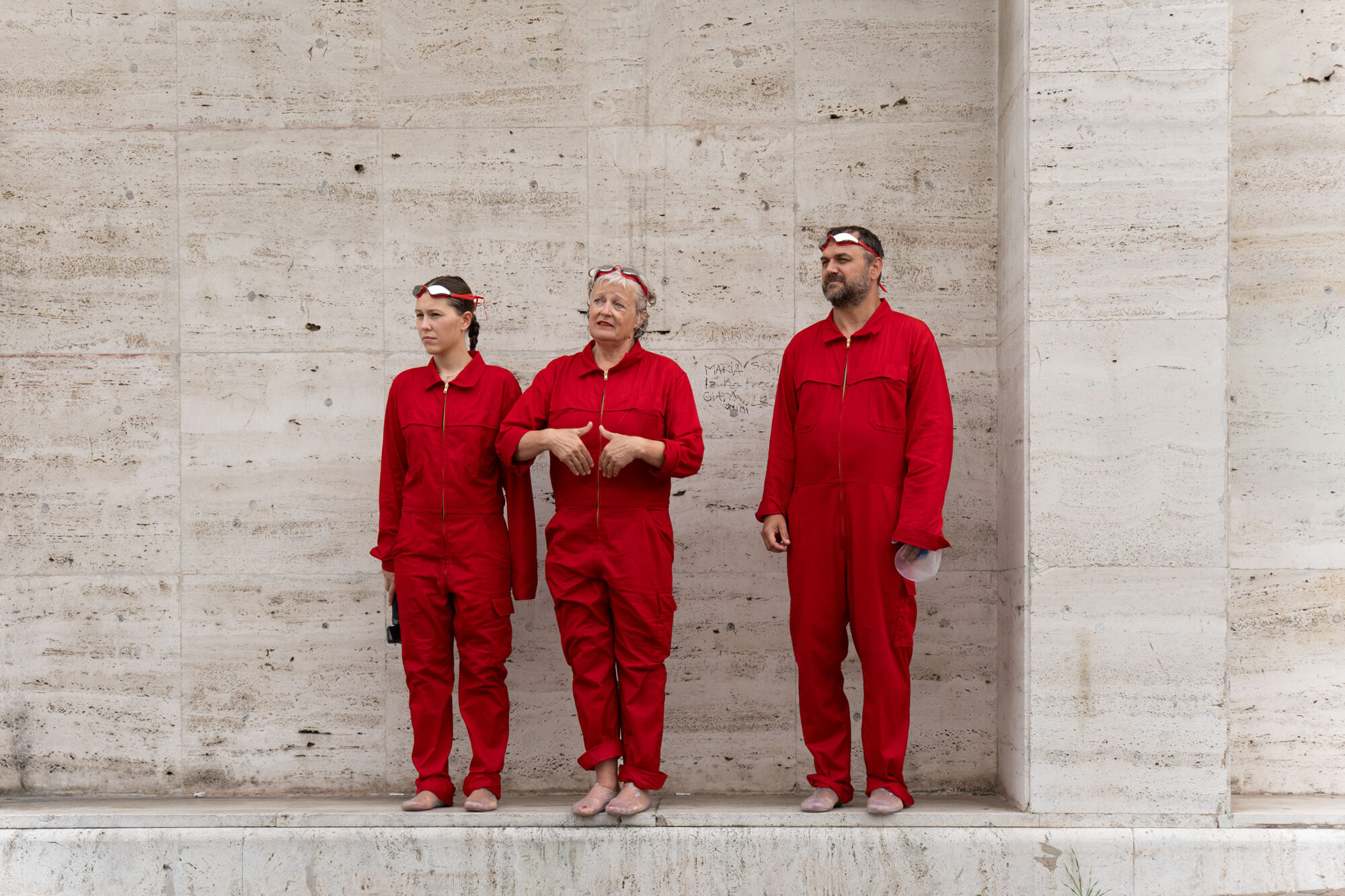
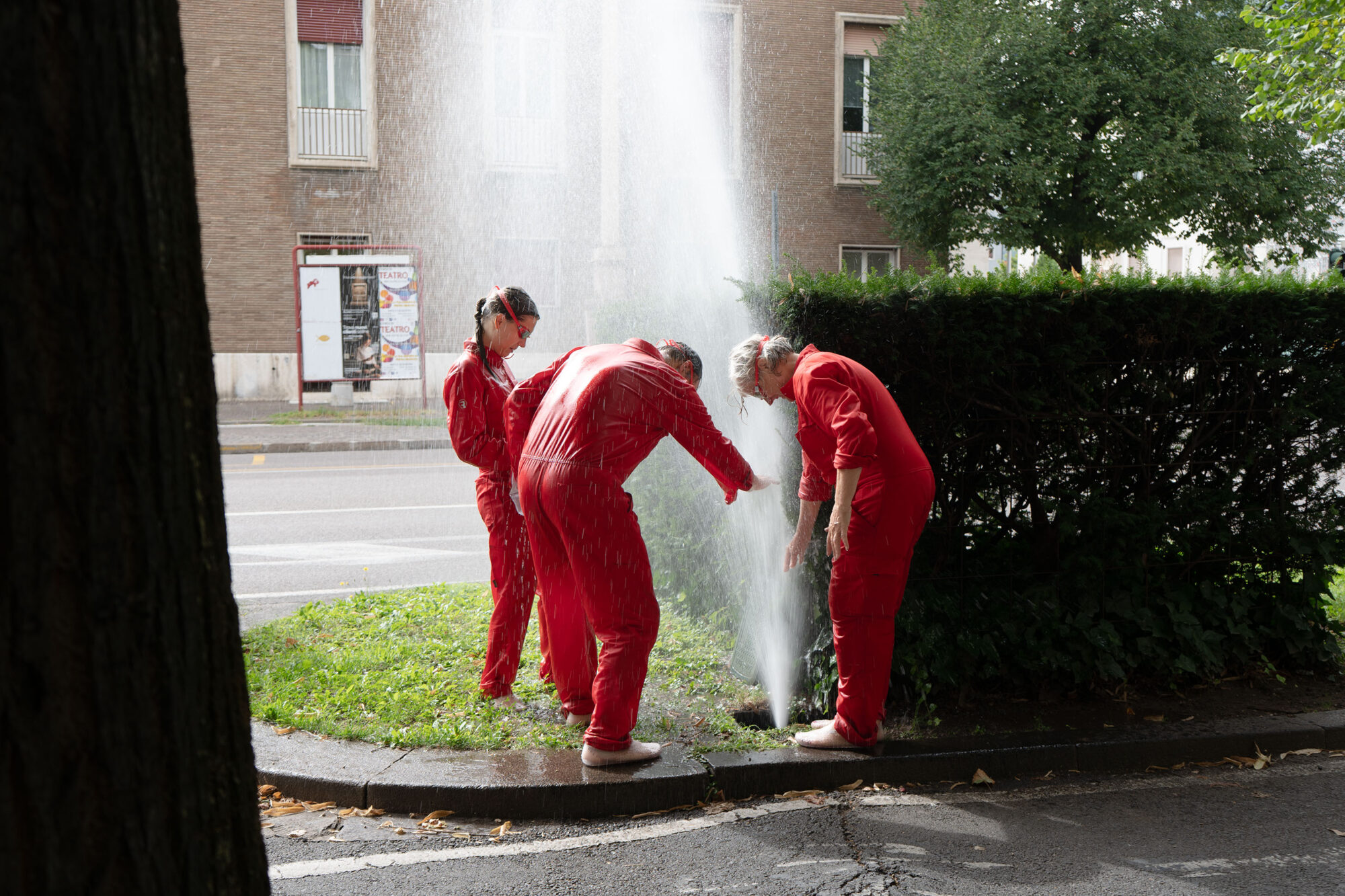
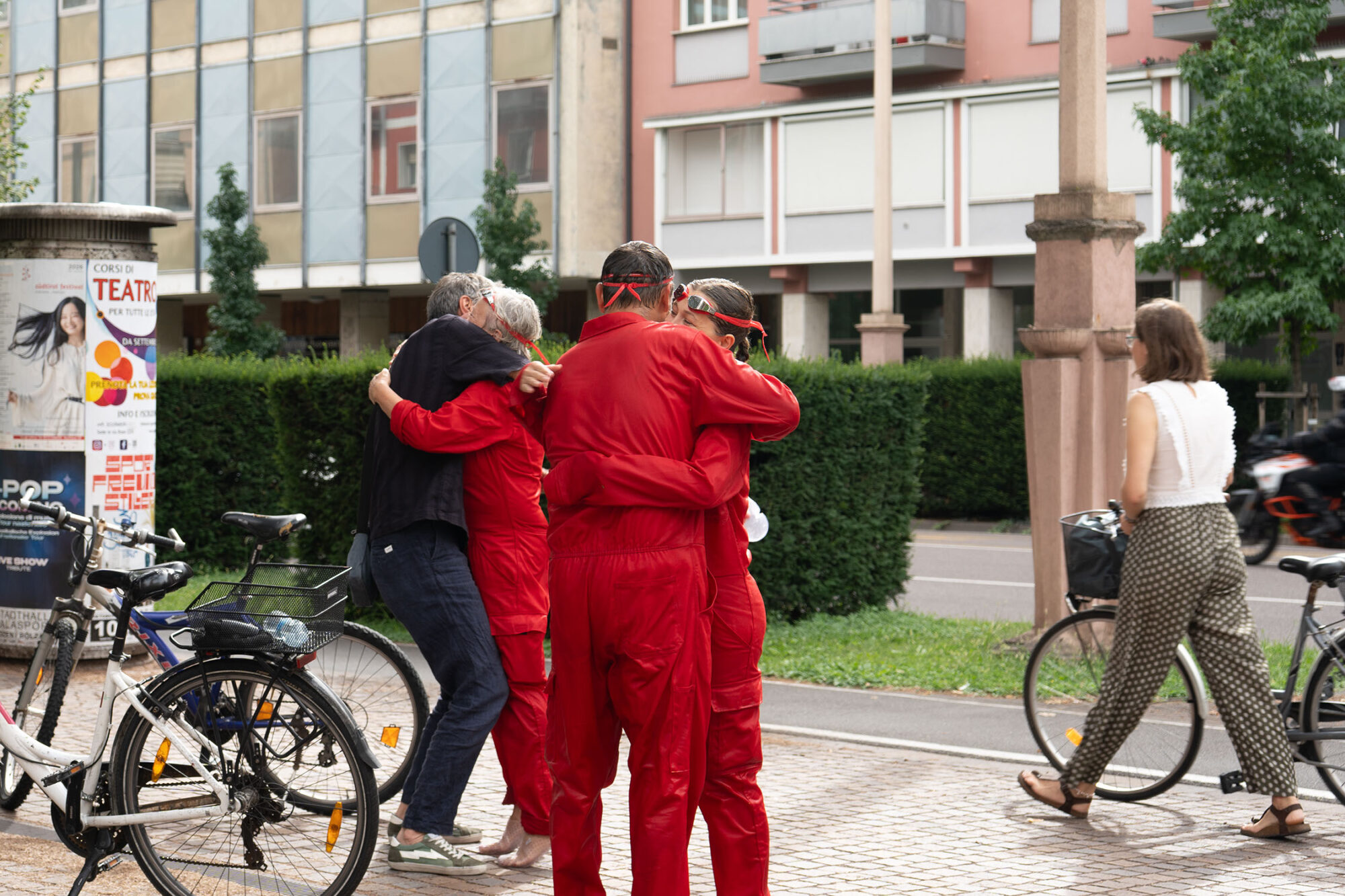
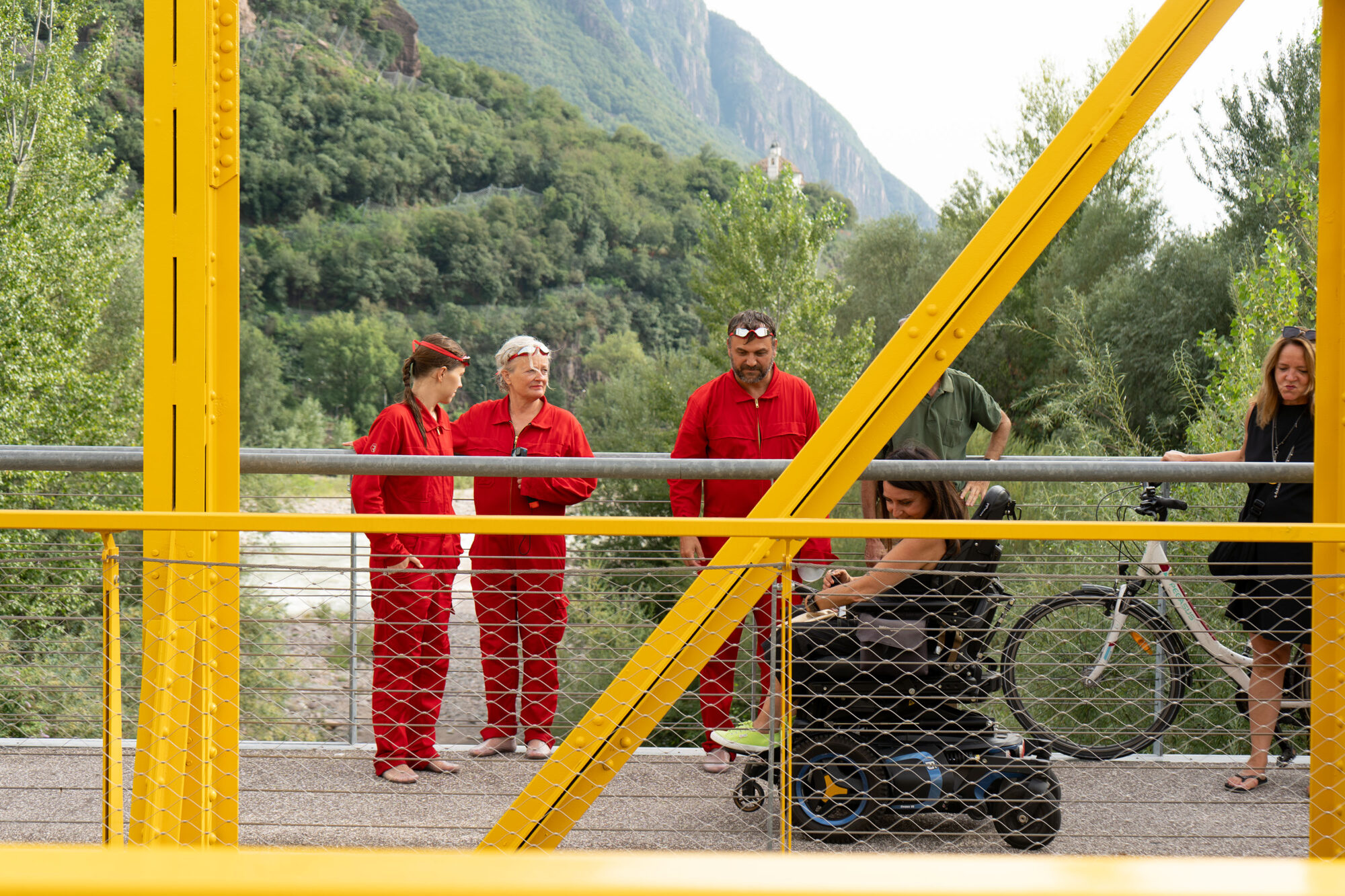
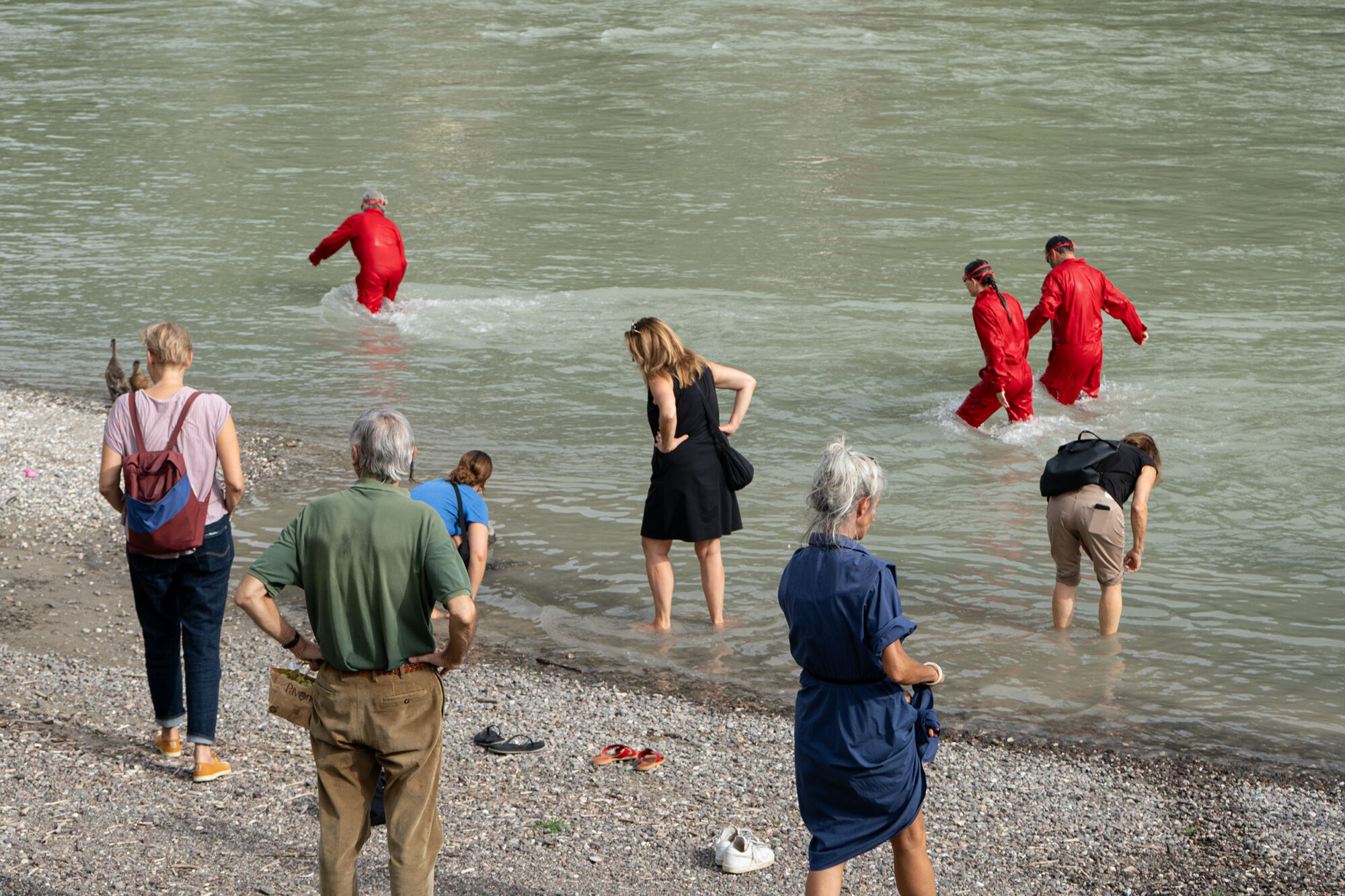
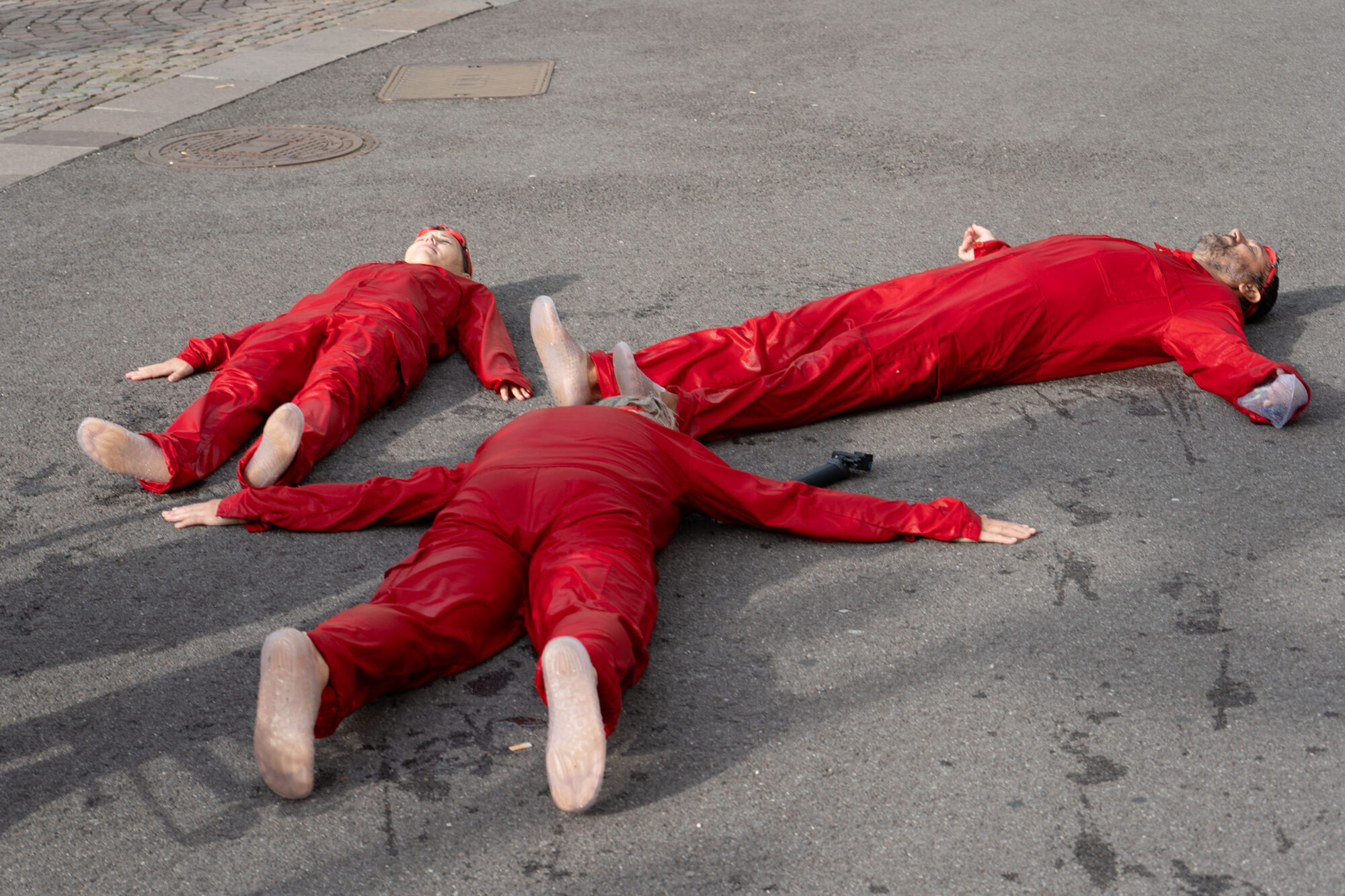
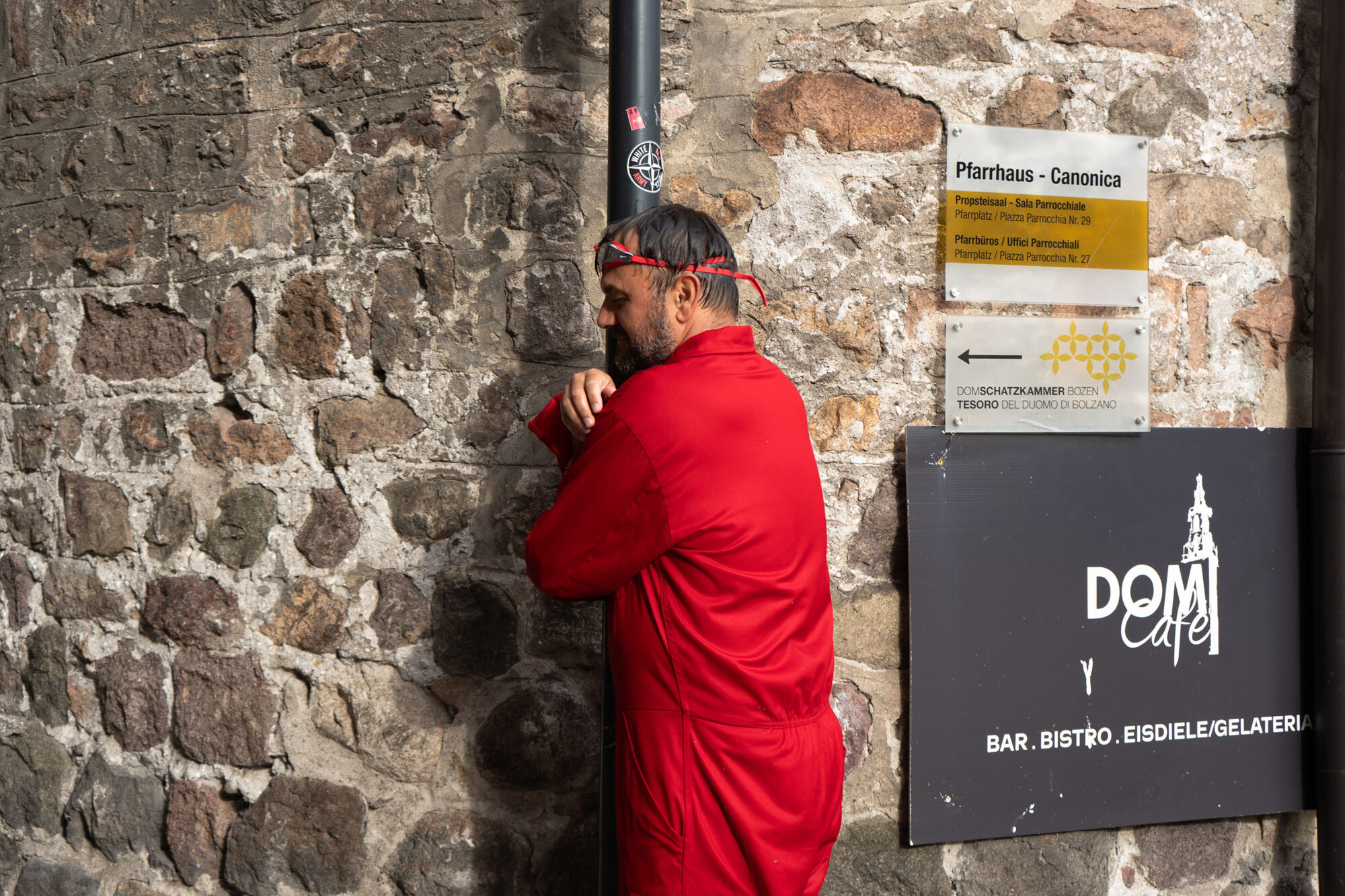
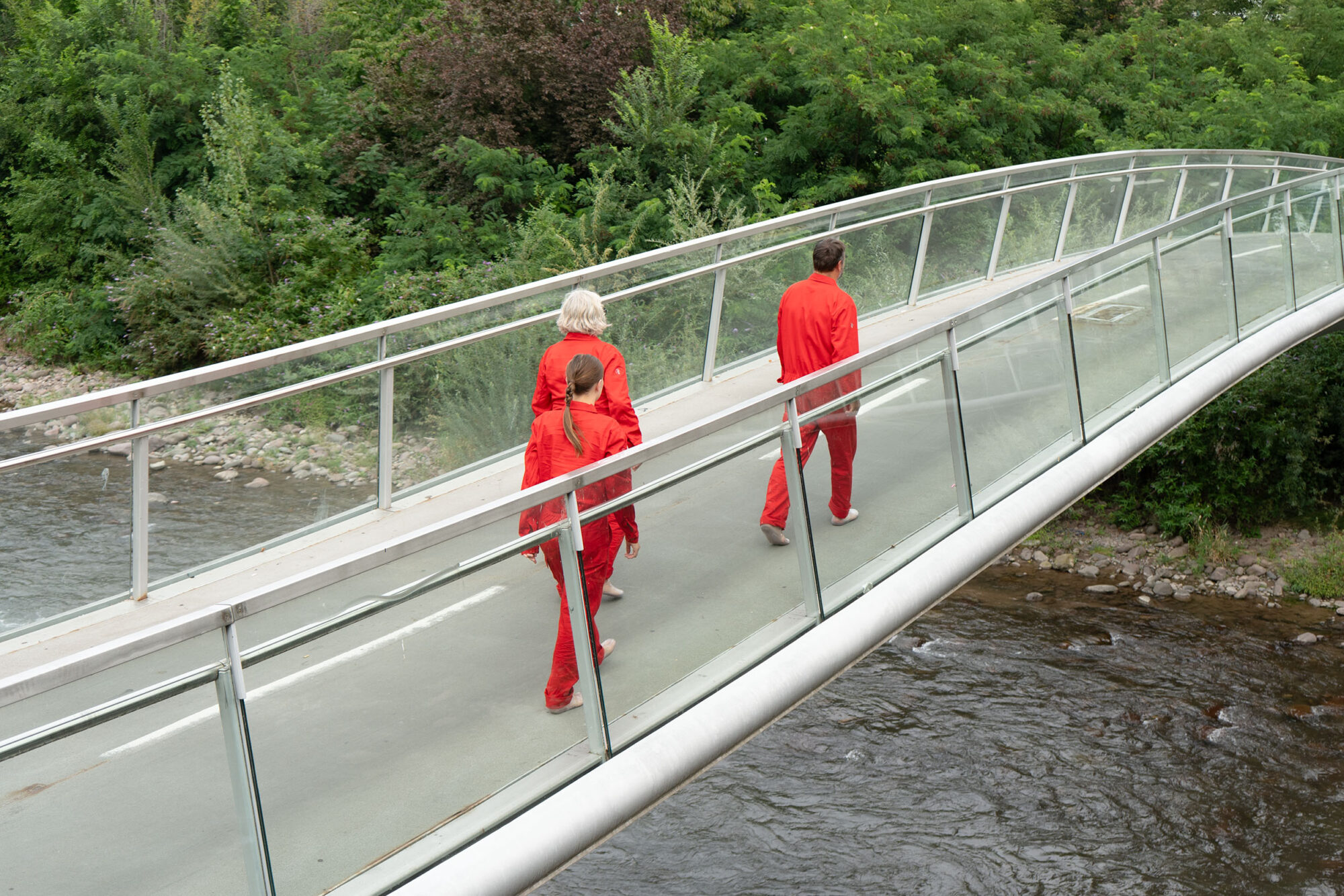
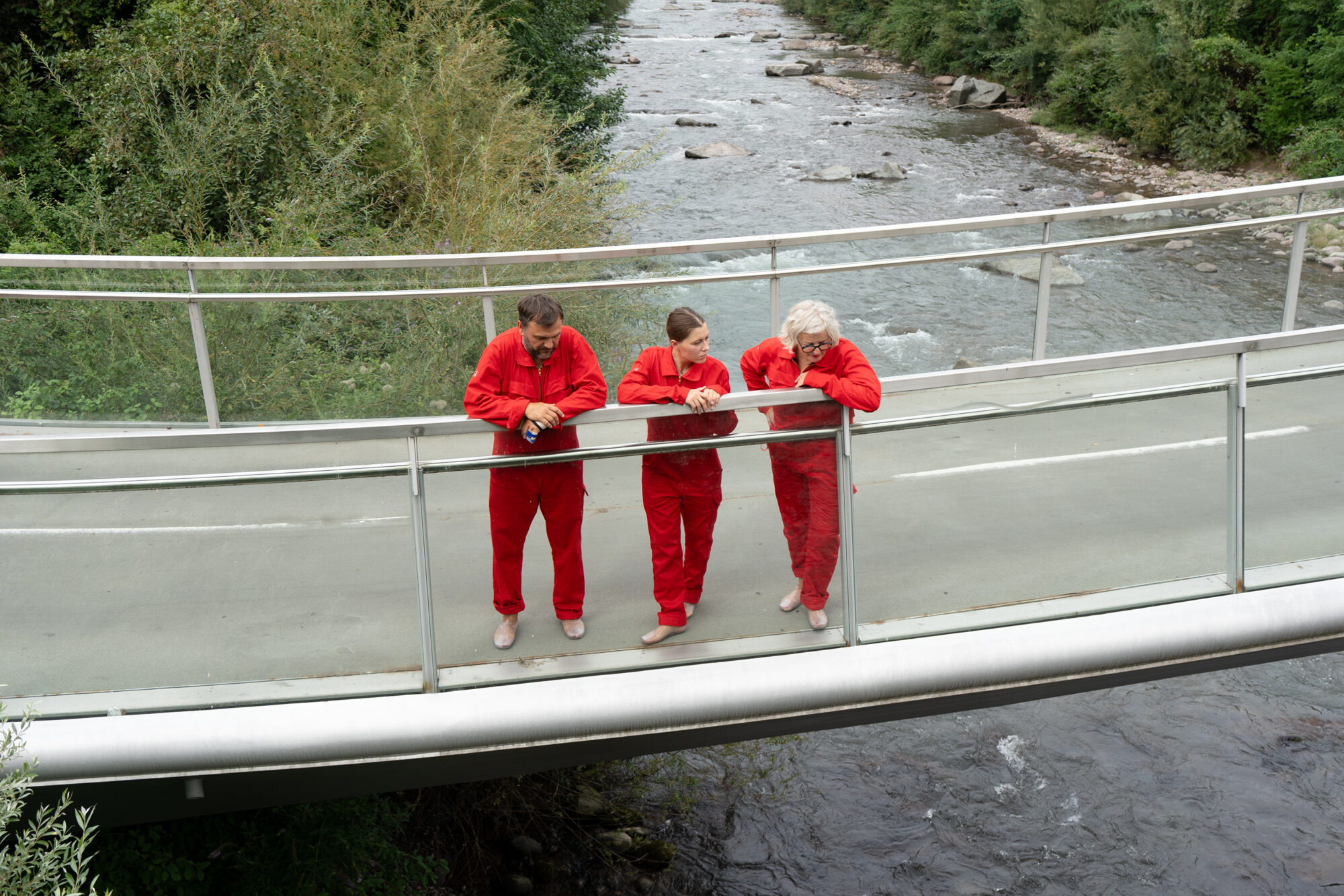
A diffused performance unfolds across Bolzano, transforming the city into a laboratory for urban experimentation. The Public Agency for Cooling moves through public space with a simple yet provocative goal: to remain constantly wet. Between fountains, rivers, and unexpected encounters, the public is invited to observe, engage in dialogue, and take part in an experience that, through water, imagines new ways of inhabiting the city and envisioning its future.
3 October — On water!
On Water! An evening to get the city wet and rediscover our relationship with water through small, surprising collective actions! From creating a wet manifesto to the Water Bar and the Gurgling Corner, WOOPS invites the public to immerse themselves in a participatory experience of steam, droplets and sound improvisations.
An event to experience together on Saturday, 3 October, from 6 to 8 pm, meeting at the Museion Bridges, as part of BAW Bolzano Art Weeks.

— WOOPS (Work On Outrageous Public Spaces), Hannes Gröblacher, Lilli Lička, Mira Samonig
The project team for get wet! consists of Hannes Gröblacher, Lilli Lička and Mira Samonig, the heads of the WESTBAHNPARK.LIVE initiative, a civil engagement endeavour aimed at improving urban public spaces in relation to climate change, green space justice, urban development and the non-human perspective. This interdisciplinary trio has collaborated on several performative actions in public spaces. Each of them has their own practice and background, and they all teach, research, publish and collaborate in varied teams. Together they gave presentations, talks and lectures and reflected on their artistic practice.
Hannes Gröblacher and Lilli Lička are founding members of BLA. (Büro für lustige Angelegenheiten – Office of Droll Concerns), where they developed and carried out performative actions in public spaces since 2012. The aim of BLA was to address topics where societal conditions manifest in public spaces, such as borders, the distribution of spaces, and rules and regulations.
Year
2026 – ongoing
As part of
Situated Creative Practices for the Pluriverse (SIT-PLU), Creative Europe Cooperation project
Curated by
Lungomare (Angelika Burtscher, Daniele Lupo)
Coordination
Lungomare (Elisa Del Prete)
Production
Lungomare (Paola Boscaini, Angela Bosin)
Partner
LUCA School of Arts (Belgium), Floating University (Germany), ZEMOS98 (Spain), Idensitat (Spain), Lungomare (Italy), Baltan Laboratories (Netherlands), EINA (Spain), Universitat Politècnica de València (UPV) (Spain)
Website
With the support of
SIT-PLU wird von der Europäischen Union finanziert. Die geäußerten Ansichten und Meinungen sind jedoch ausschließlich die der Autor*innen und spiegeln nicht unbedingt die Ansichten der Europäischen Union oder der EACEA wider. Weder die Europäische Union noch die gewährende Stelle können dafür verantwortlich gemacht werden. (GA Art. 17)
Funded by
the Autonomous Province of Bozen – South Tyrol, the Autonomous Region of Trentino – South Tyrol, and the Municipality of Bozen.